In September, Paloma Mizuho Stadium will become the centre of the Asian Games. Nagoya has spent years designing it for what happens when everybody goes home.
On 19 September, Paloma Mizuho Stadium will become something it was explicitly built to become. Athletes, officials, media and spectators from across Asia will arrive in Nagoya for the opening ceremony of the 20th Asian Games. For sixteen days the stadium will sit at the centre of an event involving 45 countries and regions. Cameras will point towards its track and its stands. For a few weeks, this corner of Nagoya will be difficult to ignore. And then almost everybody will leave.
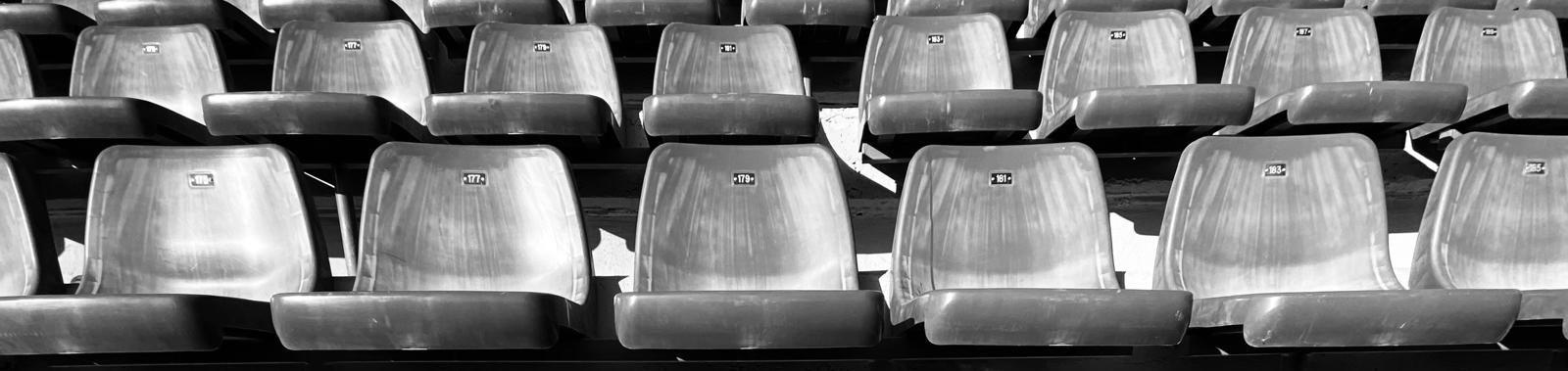
That second moment is the one that makes Mizuho interesting. Most stadiums reveal their purpose most clearly when the stands are full. Crowds arrive, noise rises and a building designed to contain thousands of people finally does its job. Nagoya has build a stadium whose purpose is also visible when nothing major is happening there. On ordinary days its third-floor concourse is intended to remain open to the public. People can walk and run through the building without buying a ticket or waiting for a fixture. It sounds like a small detail. It is actually the idea around which much of the new stadium makes sense.
Mizuho before the Asian Games
There has been an athletics stadium at Mizuho since 1941. Over the decades, the surrounding park grew into one of Nagoya’s major public sporting landscapes. Adding facilities for rugby, baseball, swimming and more. Before the latest redevelopment, the city’s own figures showed more than 1.4 million annual visits to the park’s paid facilities alone. Mizuho was also designated as a wide-area evacuation site in Nagoya’s disaster planning. Long before anyone decided that the Asian Games should open here, people were already using this piece of the city for sport and recreation.

That history created an unusual problem for the redevelopment. Building a major stadium inside Mizuho Park could not simply be a question of how many seats or hospitality areas could fit into the site. There was already a public park around it. According to the stadium’s architects, the old athletics ground had become a physical interruption inside that park. Routes stopped at the building instead of continuing. The old stadium had become an object the park itself had to bend around.
The replacement therefore tries to do something that runs against the basic logic of a stadium. Stadiums usually create borders. There is an outside and an inside, a ticketed and an unticketed space, a crowd that belongs there for several hours and everyone else who stays beyond the gates. At Mizuho, the designers tried to make that boundary more porous. The concourse becomes part of the park. A deck continues beyond the stadium towards the recreation grounds on the opposite side of the Yamazaki River. A new bridge helps connect the two. Together, the routes form a figure-eight circulation system called the Mizuho Loop.

Most host cities promise the same thing before a major event. The stadium will not just be for the tournament. It will improve the area, bring people together and keep serving the city long after the final whistle. The promises sound good when the seats are new and the cameras are arriving. The real test comes later, when the banners are gone and nobody is watching.
Built for ordinary days
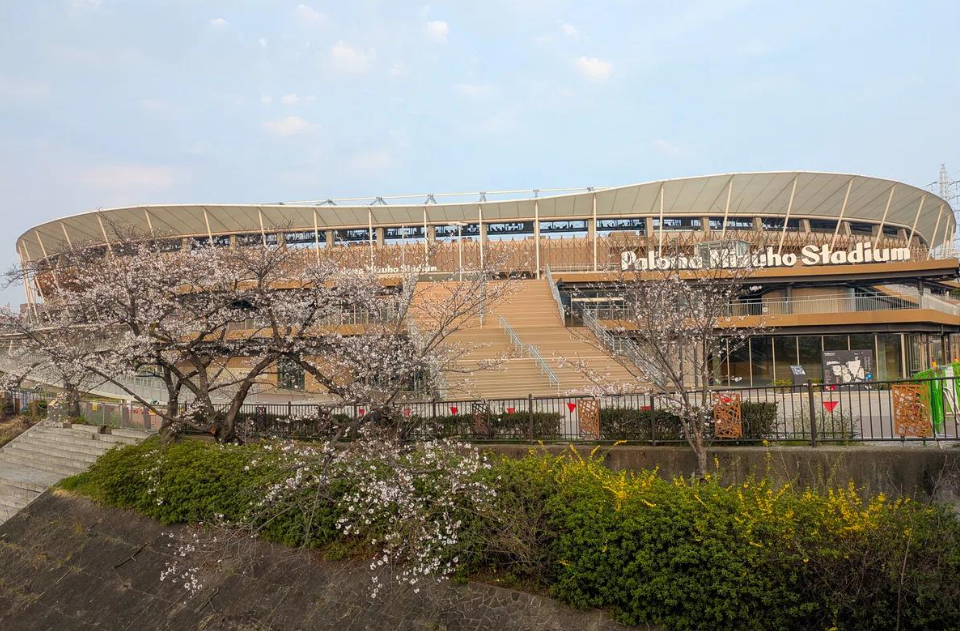
Paloma Mizuho Stadium opened in April 2026, just five months before the Asian Games. It holds around 30,000 people. The roof covers every seat. There is a nine-lane athletics track and a natural-grass field. Nagoya Grampus played the first football match there just before the official opening.

Those are the details that make it sound like any other new stadium. The more interesting details are smaller. Around 300 spaces are reserved for wheelchair users. There are seats with hearing loops, baby-care rooms, a calm-down room and a sensory room. The idea is simple people should be able to use the building in different ways, not just sit in a seat and watch an event.
The same idea runs through the outside of the building. The architects used timber from Aichi Prefecture. Trees cut down during construction were reused elsewhere in the site. Decks and walkways pull the stadium into the park instead of cutting it off from it. None of that guarantees that people will love the place. But it shows what Nagoya wants it to become.
Then the gates close
There is one problem with building a stadium around openness. Sometimes, a stadium has to close. That is happening now. Since July, normal bookings have been suspended while the Asian Games organisers prepare the site. Routes through the area are being changed. Public space is being taken over by security, staff, temporary barriers and event planning.
For a few weeks the stadium will stop behaving like an open part of the park. It becomes exactly what a major event needs. Gates will matter again. Access will be controlled. Crowds will be moved in and out. The same concourse used by runners on a quiet day will have to carry thousands of people towards an opening ceremony.
Mizuho wants to be open, but it also has to be secure. It wants to feel like part of a park, but on 19 September it will be the centre of one of Asia’s biggest sporting events. It wants to belong to everyday life, but for sixteen days it will belong to the Games.
The test comes after the Games
On 19 September, Mizuho will become everything a major stadium is supposed to be. The gates will close. The stands will fill. The park will bend around the needs of the Asian Games.That part has been planned down to the smallest detail. What happens afterwards is harder to predict.
The redevelopment was not built around an empty theory. Nagoya’s own planning work identified real problems in the old park: routes were broken by roads, the river and large sports facilities, while the stadium itself sat as one of the biggest barriers in the middle of it. Those plans were shaped not only by architects and officials, but also by surveys, public meetings and feedback from people who already used Mizuho.
There is no guarantee that a good plan becomes a good place. But Mizuho has one important thing in its favour. The people who redesigned it did not start with an empty map. Nagoya listened to the public. The problems that came back were practical ones: movement through the park, connections between different parts of it and the way large sports facilities interrupted those routes.
If the new Mizuho works, it will not be because the Asian Games gave the park a future. The park already had one. It will be because Nagoya used the Games to remove some of the barriers people had been living with for years. The real measure of this stadium will come long after the ceremonies are over. When nobody is thinking about legacy anymore and moving through Mizuho simply feels easier than it did before. A perfect example of a stadium actually being part of the public.