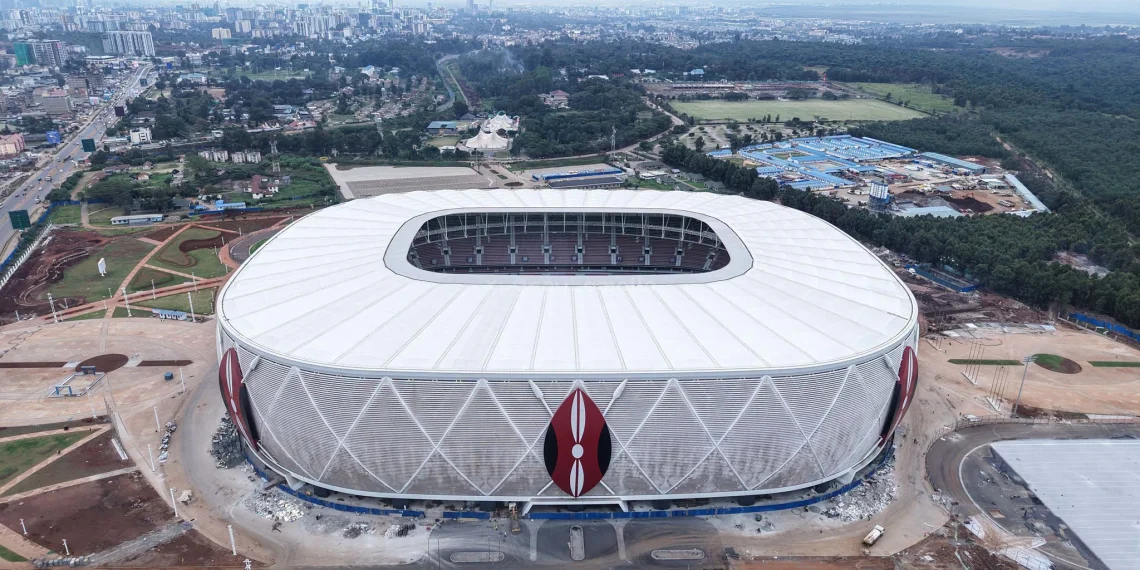
A huge Kenyan shield rises from the facade of Nairobi’s new national stadium. Red and black against the steel, crossed spears stretching behind it. Walk around the building and another appears. Then another. Eight in total, each one large enough to turn a national symbol into part of the skyline.
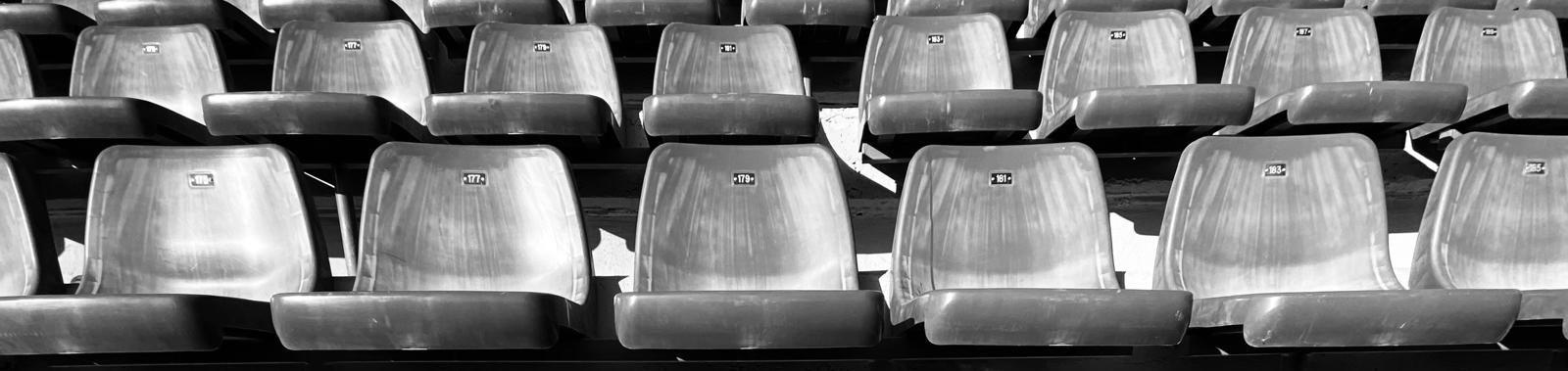
Inside the same colours return. Red, black and green move through the seating bowl. Before the first great goal, before the first national celebration, before anyone has a favourite gate or a story tied to a particular row of seats, the stadium is already telling people what it wants to be. Kenyan.
Usually, that kind of meaning comes later. A place becomes national because people keep returning to what happened there. A final is won. A country gathers. A political moment becomes tied to a particular pitch or stand. Years later, the name of the stadium means more than the building.
Nairobi’s new stadium has barely had that chance. In August 2026, the 60,000-seat Raila Odinga International Stadium was still receiving its finishing touches. Sports Cabinet Secretary Salim Mvurya said it was 94 per cent complete and expected the first match before the end of the year.
So the question is not only what Kenya has built, but what the building is already being asked to mean. Can you design national identity into a stadium before a nation has created memories there?
Nairobi Already Had a National Stage
Nairobi has been here before. Nyayo Stadium and the much larger stadium at Kasarani were both built during the first decade of Daniel arap Moi’s presidency. Kasarani was the grander project: a 60,000-seat stadium inside a wider sports complex, developed as Kenya prepared to host the 1987 All-Africa Games. Chinese financial and technical support helped make the project possible.

Kasarani was never only about having enough seats for a continental sports event. Historian Chepchirchir Tirop argues that Moi used sport to shape his political image at home and to present Kenya internationally. Foreign dignitaries were taken to see the stadium during construction. When the All-Africa Games finally started, the opening and closing ceremonies made Kasarani as much a stage for national presentation as for competition.
Nearly forty years later, Nairobi is building another enormous national ground ahead of another major African tournament. The impulse is familiar.
The Shield
To understand the giant shapes on the facade, you need to know what the shield was before it became a national emblem.
The form draws from the shield associated with Maasai material culture. Traditionally known as the elongo, it was a working object: hide stretched across a wooden frame and carried by Maasai warriors for protection. But it could say something about the person carrying it too. National Museums of Kenya describes Maasai shields as objects of prestige and identification, with their painted designs helping distinguish groups and identities.
That history matters because the Maasai are one of Kenya’s communities, with cultural roots across southern Kenya and northern Tanzania.

When Kenya became independent in 1963, a shield and two crossed spears sat at the centre of the new national flag. Black, red and green bands surrounded them, separated by white. Official Kenyan government guidelines explain black as representing the Kenyan people, red the blood shed in the independence struggle, green the country’s land and natural resources and white peace. The shield and spears represent the defence of the independence that had been won.

A form rooted in Maasai culture had become part of the visual language of an independent Kenya. At Raila Odinga International Stadium, eight shield-and-spear structures mark the main entrances. Project architect Major Victor King’e has explained that they are not only symbolic. Each shield corresponds to an entry point, giving a crowd of 60,000 a huge visual marker to follow.
Kenya in the Picture
The same idea continues inside. Red, black and green move through the seating bowl. The references are not hidden in an architect’s explanation. They are meant to be recognised. That will matter when AFCON arrives.
The 2027 Africa Cup of Nations will be hosted jointly by Kenya, Tanzania and Uganda from 19 June to 17 July. It will be the first AFCON staged by three countries and the tournament’s first return to East Africa since Ethiopia hosted it in 1976.
For several weeks, cameras will repeatedly show Nairobi to viewers who may know little about the city or the building they are looking at. A television director will not need long. The pale facade. The huge shields. The red, black and green inside. Kenya.
There is power in being instantly recognisable. But recognition is not the same as representation. Kenya is too large, too layered and too varied to fit neatly inside three colours and a shield. The stadium cannot show the whole country. No building can. What it can do is choose a visual language.
Talanta got a name
For most of its construction, the project had a simpler name. Talanta Stadium. Then Raila Odinga died in October 2025. Odinga had spent decades in Kenyan national politics and had served as prime minister. His death was followed by a state funeral and seven days of national mourning.
Less than two months later, during Jamhuri Day celebrations at Nyayo National Stadium, Nairobi Governor Johnson Sakaja proposed that the new stadium carry Odinga’s name. President William Ruto approved it. Talanta Stadium became Raila Odinga International Stadium.
Before the ground had produced its first generation of sporting memories, political history had already entered the name above its doors.
That complicates the idea of designing something “national”. A colour can be presented as shared. A flag is supposed to belong to everyone. A person comes with a life, political choices, supporters, opponents and a place in history that different people may understand differently.
That is not an argument for or against the name. It is why the name matters to this story. National identity is never only made from symbols everyone experiences in exactly the same way.
A National Project From the Start
The state is present throughout the stadium’s creation. The project began in 2024 with China Road and Bridge Corporation carrying out construction under the supervision of the Kenya Defence Forces Engineering Department.
National symbols were built into the entrances. National colours moved inside. The project was prepared for one of Africa’s biggest sporting events. Then the name of one of Kenya’s best-known political figures was attached to it.
In 2026, Kenya’s Senate began asking uncomfortable questions about the stadium. Why had the reported cost risen from about KSh34.6 billion to KSh45.8 billion? Why had the contract been awarded the way it was? Sports Cabinet Secretary Salim Mvurya said much of the difference came from taxes, levies and the cost of importing materials.
Those questions are part of the stadium too. The giant shields may be the first thing people notice, but behind them sits a very expensive project built with public money. If this is meant to be Kenya’s stadium, then Kenyans have every reason to ask what was spent on it and why.
That does not make the stadium any less capable of becoming a source of pride. It simply means pride does not have to come without questions. A building can represent a country and still be argued over by the people it is supposed to represent.
What the crowd will make of it
Raila Odinga International Stadium already has a clear identity on paper. The shields come from the national flag, the seats carry its colours and the name ties the building to one of the most important figures in recent Kenyan politics.
What nobody can design is what happens to those symbols once people begin using the place.A shield may become the easiest place to meet before a match. One end may become louder than the rest. A section of red seats may be where somebody watches Kenya play for the first time. Over years, those memories will settle around the architecture already there.
The shield itself has followed that path before. Its form has roots in Maasai culture, later became part of the flag of independent Kenya and has now been turned into stadium architecture. The meaning changed each time without losing what came before.
That also answers the question at the heart of this story. Yes, national identity can be designed into a stadium. Kenya has chosen the symbols, colours and history it wants the building to carry.
But design can only provide the first version. Whether the stadium eventually feels national will depend on what Kenyans do with it, what happens there and which memories survive. Nairobi has put Kenya into the walls. The people inside will decide what that comes to mean.