
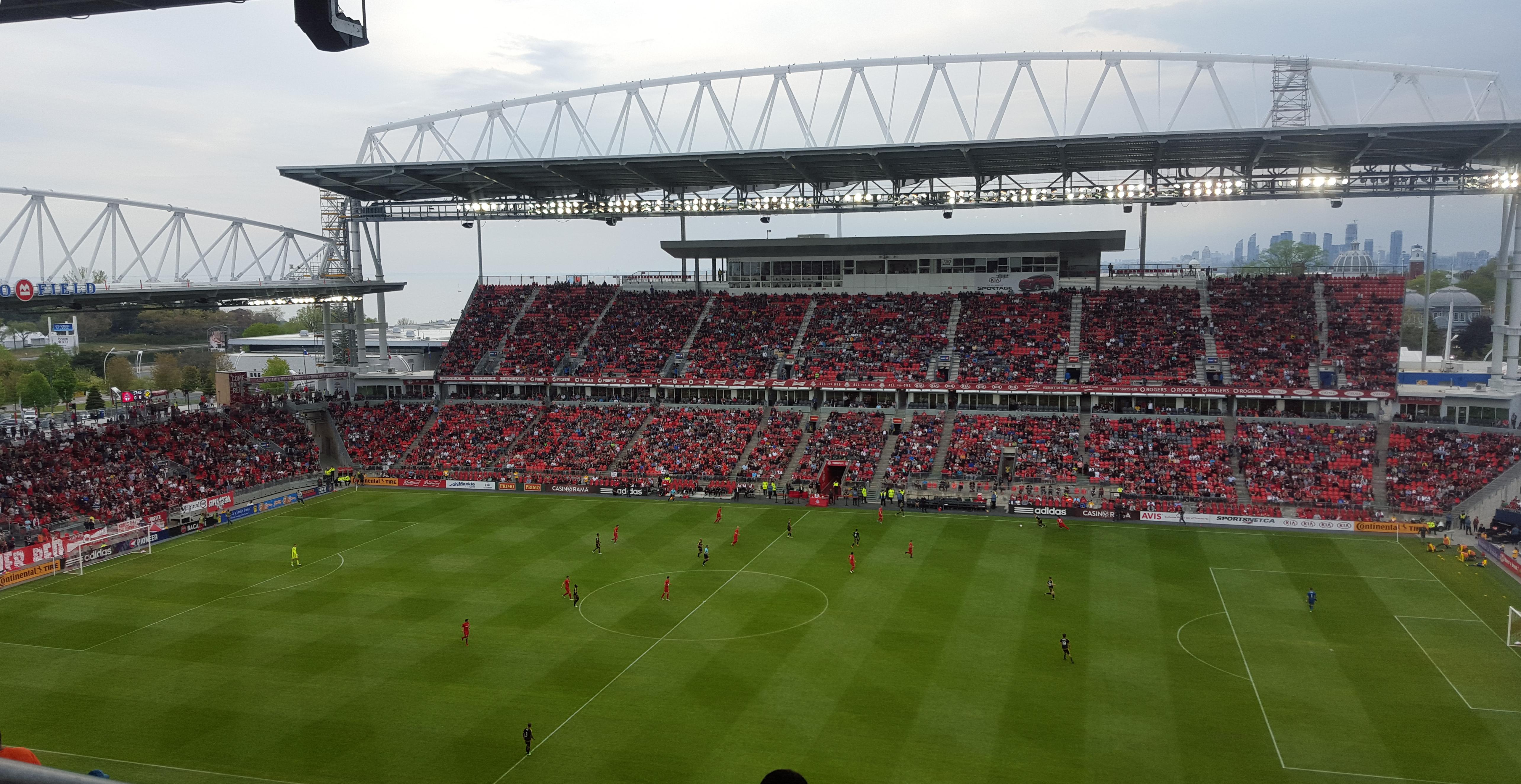
BMO Field Toronto is one of the smallest stadiums at the 2026 World Cup, yet few venues tell a bigger story. Set beside Lake Ontario at historic Exhibition Place the stadium has grown from a modest home for Toronto FC into an international stage. Its rise mirrors the city around it. Modern, diverse and increasingly confident on the world scene.
This is not only a story about seats and steel. It is a story about how football found a visible home in one of the world’s most multicultural cities. Through Toronto FC, supporter culture and the road to World Cup 2026.
A Stadium Built for football
BMO Field opened in 2007 with room for around 20,000 people. It was built for two clear reasons. Toronto FC needed a home for its first MLS season. Canada also needed a main venue for the FIFA Under 20 World Cup. The first version was practical and modest. It matched the moment. Football in Toronto was growing, but it had not yet become central to the city.
Its location gave the stadium immediate meaning. BMO Field rose inside Exhibition Place on the site of old Exhibition Stadium. Sport had been part of this land for generations. By staying close to downtown and the lake, Toronto avoided building another remote arena surrounded by parking. Supporters could arrive by train or on foot. The route to the match became part of the experience.
As Toronto changed, the ground changed with it. Natural grass replaced the original surface in 2010. A major rebuild between 2014 and 2016 added an upper tier and a roof canopy. Capacity grew to around 30,000. The venue looked more ambitious and felt ready for bigger occasions.


Another expansion is now preparing the stadium for 2026. Temporary seating will lift capacity to around 45,000 for six World Cup matches. New broadcast and fan facilities are being added. During the tournament it will be called Toronto Stadium. Yet the deeper story is not the temporary name. It is the steady rise of a venue that grew alongside the city around it.
How Toronto FC Gave the Ground Meaning
A stadium alone cannot create meaning. It needs habits and memories. People returning every week. Toronto FC gave BMO Field that life from the start.
When the club launched in 2007, the city gained more than a new team. It gained a weekly football ritual. Toronto had seen clubs before, but many had come and gone with unstable leagues and short horizons. This time felt different. There was a purpose built stadium and a place in MLS. Football would now have a permanent home in the city.
The response was immediate. Home matches sold out in the early years even when results were poor. During the first season the club went long stretches without scoring, yet crowds kept coming. Supporters were not waiting for success before caring. They had already decided the club mattered. In a sports market crowded with established teams, that loyalty was significant.
Toronto FC also connected older football histories to a new era. Long before MLS, communities across the city had built their own clubs, leagues and traditions. Teams such as Toronto Metros Croatia and Toronto Blizzard proved there was real appetite for the sport. What had often failed was not Toronto’s interest in football, but the structures around it.
Its impact reached beyond club colours. Toronto FC helped raise the profile of football across Canada and became part of a wider national shift that later included Vancouver and Montreal in MLS. The club also reflected the city around it through community work and cultural partnerships BMO Field had been built as a stadium. Toronto FC turned it into a civic space.
The Voices of the South End
That civic space is felt most clearly behind one goal. The South End is the loudest part of BMO Field and the emotional centre of matchday.
Several supporter groups stand side by side and create the rhythm of the stadium. They share colours and a club badge, but they do not all look or sound the same. That variety is part of what makes the atmosphere feel alive. One end of the ground contains many identities at once.
The best known names include Red Patch Boys, U Sector and Kings in the North. Red Patch Boys emerged when Toronto FC was created and became one of the largest groups in the stadium. U Sector carried older supporter traditions into the MLS era and built a reputation for independence and humour. Kings in the North added a newer generation with a strong focus on energy, visuals and inclusive standards.
Matchdays begin before kick off. Fans gather in nearby bars and streets, then move together toward the stadium. Inside drums set the tempo. Flags rise above the crowd. Large tifos cover sections of the stand. Chants roll across the seats and return again. The atmosphere draws from different football cultures at once, mixing North American sport with influences from Europe, Latin America and beyond.
That blend mirrors Toronto itself. The city is shaped by migration and layered identities, and the stands reflect that reality. Different backgrounds and traditions meet in the same space for the same team. Not every supporter experiences the club in the same way. They do not need to. The power of the South End comes from many groups choosing to sing in the same direction.
The glory of the past
To understand why that matters, it helps to look beyond the turnstiles. Toronto’s football story did not begin in 2007. It did not begin with Toronto FC, and it did not begin with BMO Field.
The city had been building football culture for generations through neighbourhood life and community clubs. Today nearly half of Toronto’s population was born outside Canada, and more than 170 languages are spoken across the city. Diversity is not a slogan here. It is daily life.
For many communities, football became a way to stay connected. Croatian, Portuguese, Caribbean, Italian and many other groups formed clubs, leagues and social spaces long before MLS arrived. Toronto Metros Croatia won the NASL title in 1976. Community teams filled local pitches across the city. The sport often grew outside the spotlight, carried by volunteers, families and weekend routines rather than major institutions.

Benfica’s shirt was not the only red shirt Eusebio starred in. In 1976 he played for the Toronto Metros Croatia.
That culture also lived in streets and cafés. In Little Italy, Café Diplomático became a gathering place for tournament nights and national celebrations. Elsewhere, matches were discussed in barber shops, social clubs and restaurants. Victories overseas could fill Toronto avenues with car horns and flags. Football was not hidden. It simply existed in many smaller places at once.
BMO Field gave those separate energies a shared address. It did not invent passion for the sport. It made that passion visible at the professional level under one city name. Supporters could still carry family histories and cultural traditions into the stands, but now they did so together as Toronto.
Ready for the World Cup
That is the backdrop to 2026. When the World Cup arrives, Toronto will not be introducing itself. It already stands among the world’s major cities in finance, migration, culture and tourism. What the tournament offers is something different. It gives Toronto a month in front of a global audience.
For BMO Field, temporarily renamed Toronto Stadium, it is the largest stage in its history. The city will host six matches, including the opening game of the Canadian men’s team. To prepare, the stadium has been expanded from around 30,000 seats to more than 45,000 through large temporary stands behind both goals. Permanent upgrades to media areas, broadcast systems and hospitality spaces will remain after the final whistle.

The extra stands and new screens clearly visible after another renovation of the BMO Field Toronto
Preparation reaches far beyond the ground itself. Public funding from different levels of government is supporting transport, security and event planning. Road works around the Gardiner Expressway have been accelerated. New command systems are being developed for public safety. The scale of investment has also brought scrutiny, with debates about cost control and long term value. That tension follows almost every modern mega event.
The more lasting legacy may be smaller and closer to home. Toronto has linked the tournament to community pitches, local programmes and neighbourhood planning. That fits the wider story of this city and this stadium. The World Cup is arriving in a place already shaped by global movement. For a few weeks the world will come to Toronto. In many ways, it has been here for years.