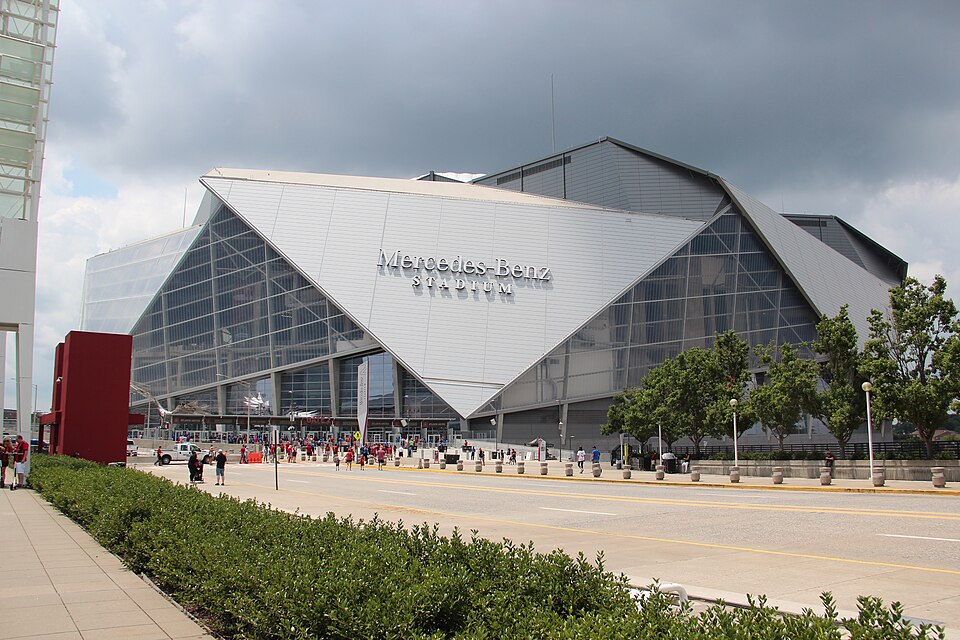
On matchdays, Mercedes-Benz Stadium Atlanta looks like the kind of building a city wants the world to remember. The roof opens like a performance. The skyline appears through glass. Inside, tens of thousands of people gather beneath one of the most recognisable interiors in modern sport. It is one of the boldest stadiums of the 2026 World Cup. It also tells a much bigger story than football.
Because Mercedes-Benz Stadium did not rise from nowhere. It grew out of a particular version of Atlanta, one built on reinvention, ambition and image. To understand why this stadium matters, you have to look beyond the architecture and into the city that made it.
A City Built on Reinvention
Before Mercedes-Benz Stadium rose above downtown, Atlanta had already spent more than a century trying to define itself through change. Much of the city was destroyed during the Civil War, and what followed was not just reconstruction but reinvention. Atlanta embraced the image of the phoenix and began presenting itself as the capital of a New South. A place built not on nostalgia but on growth and modern ambition. That instinct shaped everything that came after. Railroads, highways, the airport and eventually the 1996 Olympics all helped Atlanta present itself as a city moving forward. Eager to look bigger and more important than it had been before.

Atlanta’s rise was shaped by business leaders and politicians who understood that progress could be presented as proof of success. The city wanted investors, headquarters and national attention, and it learned early that infrastructure could help tell that story. Airports, convention centers, highways, stadiums and skyline projects all became part of the same message. Atlanta was presenting itself as the future of the South. By the late 20th century, that message had worked. The Olympics turned the city into a global stage and confirmed the image Atlanta had spent decades building.
But the story underneath was more complicated. Atlanta became known as the city too busy to hate. Even though many of the communities that shaped the city were also the ones most often pushed aside by its development. Progressive investments left deep marks across the city, especially in Black neighborhoods. Atlanta’s modern image was real, but it was never evenly shared. That tension matters here, because Mercedes-Benz Stadium would later rise from exactly that tradition. It was not simply built in Atlanta. It was built out of Atlanta’s long habit of using development to define who the city believes it is.
The “Old” Georgia Dome
Before Mercedes-Benz Stadium, Atlanta had already built a monument to its ambition. When the Georgia Dome opened in 1992, it was designed to show that the city belonged on a bigger stage. It gave the Falcons a modern indoor home and strengthened the Georgia World Congress Center. For a while, it worked exactly as intended. Huge events like the Super Bowl and the Olympics passed through the building. The Dome became part of a wider effort to present Atlanta as a serious national and international city.
But stadiums began to change faster than the Dome could. By the 2010s, the building no longer matched the economics or image of top tier American sport. NFL owners wanted more premium spaces and better technology. Modern stadiums were increasingly built to generate money in new ways. Arthur Blank wanted a stadium that could support both the Falcons and a future Major League Soccer club. At the same time giving Atlanta something more visually distinctive than a practical indoor bowl. The Georgia Dome had helped carry Atlanta into a new era. It had also become a reminder of how quickly that era was moving on.

That shift mattered most just outside its walls. The Dome stood beside Vine City and English Avenue. Two historic Black neighborhoods that had long lived with the costs of Atlanta’s redevelopment without sharing much of the reward. The stadium brought visitors and investment into downtown. However, many local residents saw little lasting benefit in return. Even before Mercedes-Benz Stadium was built, this site already carried a familiar Atlanta tension. Big civic projects promised renewal. The people living closest to them were often the ones left asking what exactly had changed for them.
A New Club for a New Atlanta
If the Georgia Dome belonged to one version of Atlanta, Atlanta United felt made for the next one. When the club entered MLS in 2017, it was not a niche addition to the city’s sports scene. Atlanta United arrived in a city that had become younger, more diverse and more mobile. With large numbers of residents who had come from elsewhere and were still deciding what local identity meant to them. In that sense, the club offered something rare in American sport. It gave people a way into something local that was still being built.
That was not an accident. Arthur Blank did not build Atlanta United as a secondary tenant for an NFL stadium. He built it as part of a broader vision for what Mercedes-Benz Stadium could represent. The venue was designed to be flexible enough for football, and the club itself was launched with unusual seriousness. Tata Martino arrived as head coach. Josef Martínez and Miguel Almirón gave the team quality and speed. The presentation felt polished and the whole project looked more ambitious than most expansion clubs in the league. Atlanta United suddenly gave people something they actually wanted to show up for.
And they did. Crowds arrived in numbers that reshaped how the stadium was seen, not just nationally but locally too. Supporter groups, tailgates, chants and pre match rituals quickly turned the building into something more human than its scale suggested. Atlanta United helped give Mercedes-Benz Stadium an identity, a young and multicultural one. The building was designed as a statement of modern Atlanta, but it was the club and its supporters that made it feel alive.
Atlanta wants the World to See
Mercedes-Benz Stadium was built to be noticed. Its roof does not simply open. It performs. The design gives the building a sense of movement even when it is still. Inside, the giant halo board wraps around the opening like a piece of theatre technology. The huge glass wall on the west side frames the Atlanta skyline itself. This was not just a stadium built to hold games. It was built to project a message. Atlanta wanted a building that looked modern, expensive, confident and globally legible.
That ambition shaped more than the visuals. The stadium was designed as a flexible machine for major events. Whether for Falcons games, Atlanta United matches, Super Bowls, concerts or the 2026 World Cup. It was also built to suggest a more polished and open version of stadium life. Arthur Blank’s fan first pricing became the clearest example of that. Cheap hot dogs and refillable soft drinks. Also lower concession prices helped create the idea that this was a premium venue without premium pricing. The message was powerful. This was a high end stadium that still wanted to look accessible.
That is what makes Mercedes-Benz Stadium so interesting as a symbol. It presents progress as efficient and carefully managed. The architecture is striking, the technology is constant and the fan experience is tightly controlled from entry to exit. In many ways, the building shows the version of Atlanta the city most likes to present. Innovative, polished and easy to sell. But like the city around it, that image only tells part of the story.
Whose Atlanta Does This Stadium Represent?
By the time Mercedes-Benz Stadium opened in 2017, it was already being asked to do more than host sport. It was supposed to signal growth, attract global events and help reshape Atlanta’s Westside. In some ways, it has done exactly that. The stadium brought investment, jobs, infrastructure upgrades and international attention to an area that had long been overlooked. Local workforce programmes and community funding all became part of the wider promise that this project would not only benefit visitors, but also the neighborhoods around it.
But that promise has always sat beside a harder reality. Vine City and English Avenue were not empty land waiting to be improved. They were historic Black communities that had already lived through decades of demolition and redevelopment from the outside in. As property values rose and investor interest followed, many residents saw the same old Atlanta pattern returning. Progress arrived together with pressure. For some, the stadium became a symbol not of inclusion, but of a city becoming harder to remain part of.
That is what gives Mercedes-Benz Stadium its real meaning. It is not just a successful venue or a striking piece of architecture. It is a building that captures Atlanta’s central tension in physical form. Ambitious and unequal. Open and exclusionary. Proud of its future but still shaped by who gets carried into that future and who gets left standing outside it. That is why the stadium means more than sport.
When the world arrives here for the 2026 World Cup, Mercedes-Benz Stadium will look like exactly what Atlanta wants it to look like. Confident and built for the future. But the real story of this stadium is not only in its roof, its screen or its scale. It is in what the building reveals about the city around it.
That is what makes Mercedes-Benz Stadium so compelling. It is not only one of the most impressive venues in modern football. It is also one of the clearest reflections of the Atlanta that built it.