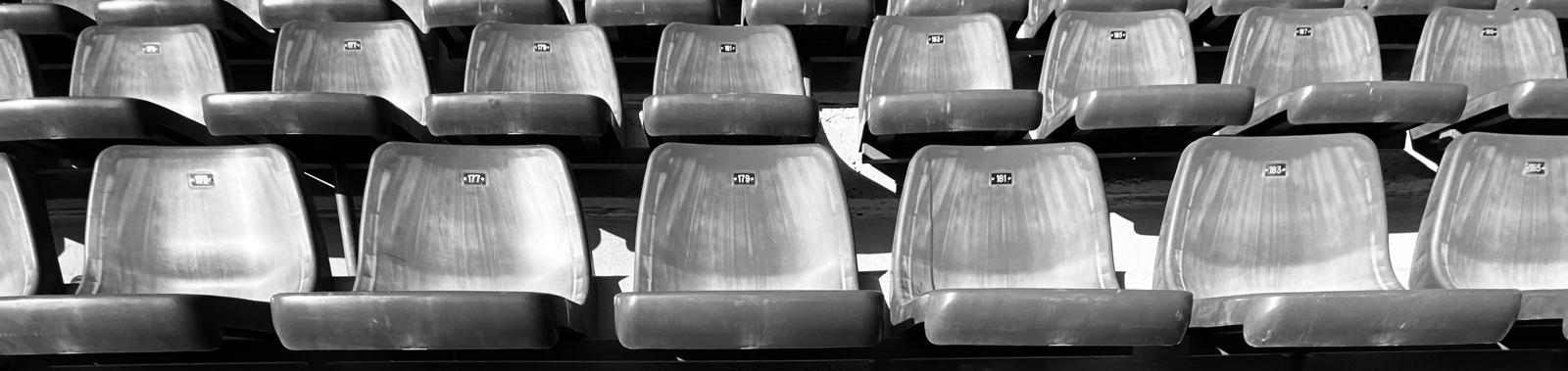
In 1995 the world watched a stadium where a divided country seemed to come together. That moment did not appear out of nowhere. For decades the ground had reflected how South Africa organized space, movement and belonging. Who was allowed to enter. Who had to wait outside. Who filled the stands and who worked beneath them. Long before it became a symbol of reconciliation, Ellis Park functioned as a carefully controlled space in a segregated city. Its history tells a quieter story about power, exclusion and the slow limits of change.
the start
Ellis Park Stadium stands on land the city designated for recreation in 1908. The Johannesburg City Council set aside part of the Doornfontein valley for public use. The area had functioned as a refuse dump and brickfield. That is a place where waste was tipped and clay was dug to make bricks. It was renamed Ellis Park after J.D. Ellis who oversaw its redevelopment. The decision reflected a growing municipal interest in organized leisure for the white population of the city.
Rugby shaped the site’s next phase. In 1927 the Transvaal Rugby Football Union secured a lease on 13 acres within the park. The union required a permanent home for the sport in Johannesburg. Construction of a dedicated rugby stadium followed and cost around £12,000. The stadium opened in June 1928 with a test match between South Africa and the All Blacks from New Zealand. It initially held about 38,000 spectators. Concrete stands framed the ground and seating was wooden and basic.
From the outset Ellis Park functioned as a white sporting institution. Rugby occupied a central place in white social and cultural life and the stadium was built to serve that audience. Black residents entered the stadium only in service roles such as cleaners, ground staff or maintenance workers. After 1948 segregation gained stronger legal form. The Reservation of Separate Amenities Act of 1953 formally banned black, Colored and Indian residents from the stands. Major matches reinforced this pattern. In 1955 a test against the British Lions drew an estimated 100,000 spectators. Temporary stands and seating on the grass absorbed the overflow. Every spectator was white.
Doornfontein
The neighborhood Doornfontein began as a mixed residential suburb. Later it shifted toward industrial use. The Group Areas Act of 1950 designated Doornfontein for white occupation and industry. Thousands of Indian and black residents were removed from nearby areas like Pageview and Vrededorp. They were relocated to townships on the edge of the city.
On matchdays the racial order of Johannesburg became visible in movement. White spectators traveled from suburban areas using the train. They arrived at Doornfontein station, which operated with separate entrances, ticket offices and platforms. A short walk through the streets of Doornfontein brought them to Ellis Park Stadium.

Black residents were in the same streets primarily as workers. Their presence in the area depended on official documents that had to be carried at all times. Police patrols operated around Ellis Park to check these papers. Those without the correct authorization to be in a white area were detained. Others remained in place to carry out assigned tasks. Some worked as street sweepers for the city council. Others guarded parked cars for private employers. They stayed outside the stadium gates until the crowds dispersed.
The physical environment reinforced these divisions. High fences marked the boundary between the stadium grounds and public sidewalks. Public benches and toilets in the surrounding streets were labeled by race. These signs were part of the daily landscape of Doornfontein. On matchdays they framed who moved freely and who remained under supervision.
A segregated country
From the streets of Doornfontein the view widened to the country beyond. In the 1950s South Africa was moving from segregation toward a more rigid system of control. Political space narrowed while daily routines continued. In this climate Nelson Mandela emerged as a national figure. By the middle of the fifties he was active as a lawyer and organizer within the ANC Youth League. He operated inside growing pressure from the state, which was already using arrests, bans and trials to limit political opposition.
Mandela played a central role in national campaigns against apartheid laws and traveled across the country to mobilize support. He served as a public spokesperson and coordinated volunteers while avoiding permanent detention to keep leadership intact. At the same time he faced repeated arrests, short prison terms and banning orders that restricted movement and public activity. Although he was not continuously imprisoned, years of trials, suspended sentences and bans effectively confined his political life. Keeping him under constant surveillance. The pressure intensified in the second half of the decade.
In 1956 Mandela was arrested with more than a hundred others and charged with treason. The trial dragged on for years and tied him to the courtroom rather than the street. During this period he lived under renewed bans and brief periods of detention. Even when exonerated in 1961, he had already spent much of the previous decade moving in and out of custody. The country at that moment was shaped by police raids, mass arrests and laws that allowed the state to silence opposition. Political leaders were detained or banned. Opposition did not disappear, but was forced out of public view and pushed into secrecy.
Robben Island
After his exoneration in 1961, Mandela did not return to public political life. He went underground as the state widened its use of surveillance and detention. In 1962 he was arrested again after months in hiding. This time the process moved quickly. He was convicted on charges linked to leaving the country illegally and later sentenced to life imprisonment after the Rivonia Trial after speaking the iconic words
I have fought against white domination, and I have fought against black domination. I have cherished the ideal of a democratic and free society in which all persons live together in harmony and with equal opportunities. It is an ideal which I hope to live for and to achieve. But if needs be, it is an ideal for which I am prepared to die. – Speech from the Dock quote by Nelson Mandela on 20 April 1964
He was transferred to Robben Island, where the state removed him from public view entirely. The shift marked a clear change. From restriction and repeated short detentions, Mandela moved into long term confinement.
The decades that followed settled into a pattern. Through the 1970s and 1980s Mandela remained imprisoned while the country experienced cycles of protest and reform attempts. States of emergency were declared. Opposition organizations were banned. Violence increased and international pressure too. Inside the country daily life continued under strict control. Sporting institutions remained active. Stadiums were filled and matches played. Ellis Park functioned through these years as it had before. Political conflict shaped the wider society, but the stadium remained a stable and familiar place within it.
New times
By the late 1980s Ellis Park no longer stood in its original form. The stadium had been rebuilt almost entirely in the early 1980s. The old structure was replaced by a modern concrete bowl. Sightlines improved. Facilities expanded. Safety standards were updated.


The experience of attending a match remained largely familiar. The system that had long governed access and movement was weakening. Policing priorities shifted. Formal segregation rules lost force. International pressure increasingly shaped South African sport.
During most of the 1980s Nelson Mandela remained in prison. He had been detained since 1962 and spent 27 years in custody. First on Robben Island. Later in other prisons. Over time his continued imprisonment became harder to sustain politically. Resistance inside South Africa persisted. Pressure from abroad intensified. Within government circles quiet discussions began about a way forward. Mandela’s release followed as part of a calculated effort to stabilize the country and manage a controlled transition. He returned to public life shaped by years of confinement, restricted movement and constant surveillance. He was already a familiar figure despite his long absence.
The end of Apartheid
In 1995 South Africa stood in a country that had only just changed course. Nelson Mandela had become president the year before, after his party won the first democratic election in the country’s history. The laws that enforced racial segregation in public life and sport were gone. International boycotts had ended. South Africa was allowed back onto the global stage. Hosting the Rugby World Cup became possible, not as a reward, but as a signal that isolation was over.
Outside the country the tournament was read as proof of progress. Images traveled easily. Flags, anthems, packed stadiums. Inside South Africa the response was more uneven. Many white supporters welcomed the return of international rugby as a restoration of something familiar. Across large parts of the black population the sport still carried distance. Rugby remained linked to exclusion and privilege. Some watched with interest. Others with hesitation. For many, daily concerns mattered more than what unfolded inside a stadium.
The Springboks themselves carried this tension. For white South Africans they stood for identity and continuity. For much of the non white population they recalled the symbols of the old order. In 1994 Mandela noticed black spectators cheering for Springbok opponents. Just as he and his fellow inmates had done while listening to matches in prison. Instead of rejecting the team, he chose to approach it. Rugby became a way to speak to those who feared political change, not by confrontation, but by recognition.
Under the new legal order black supporters could enter the stands. They had the same right to buy a ticket as white supporters. That access was new, but familiarity was not automatic. The game still felt distant to parts of the crowd. When the Springboks beat New Zealand in the final, celebration followed. Across the country the victory was marked, but not read in one way. For some it felt decisive. For others it signaled a beginning rather than a shared tradition already in place.
In 1995 it looked as if apartheid had reached its end. The laws were gone. The boycotts lifted. The images from Ellis Park Stadium suggested a clean break with the past. For many outside South Africa that image became the story. Inside the country the reality moved more slowly. Political rights changed faster than economic life. Old divisions survived in housing, income and access. The stadium captured a moment when symbols shifted. It did not erase the structures beneath them. Ellis Park showed what South Africa wanted to be seen as. The years that followed revealed how much work still remained.