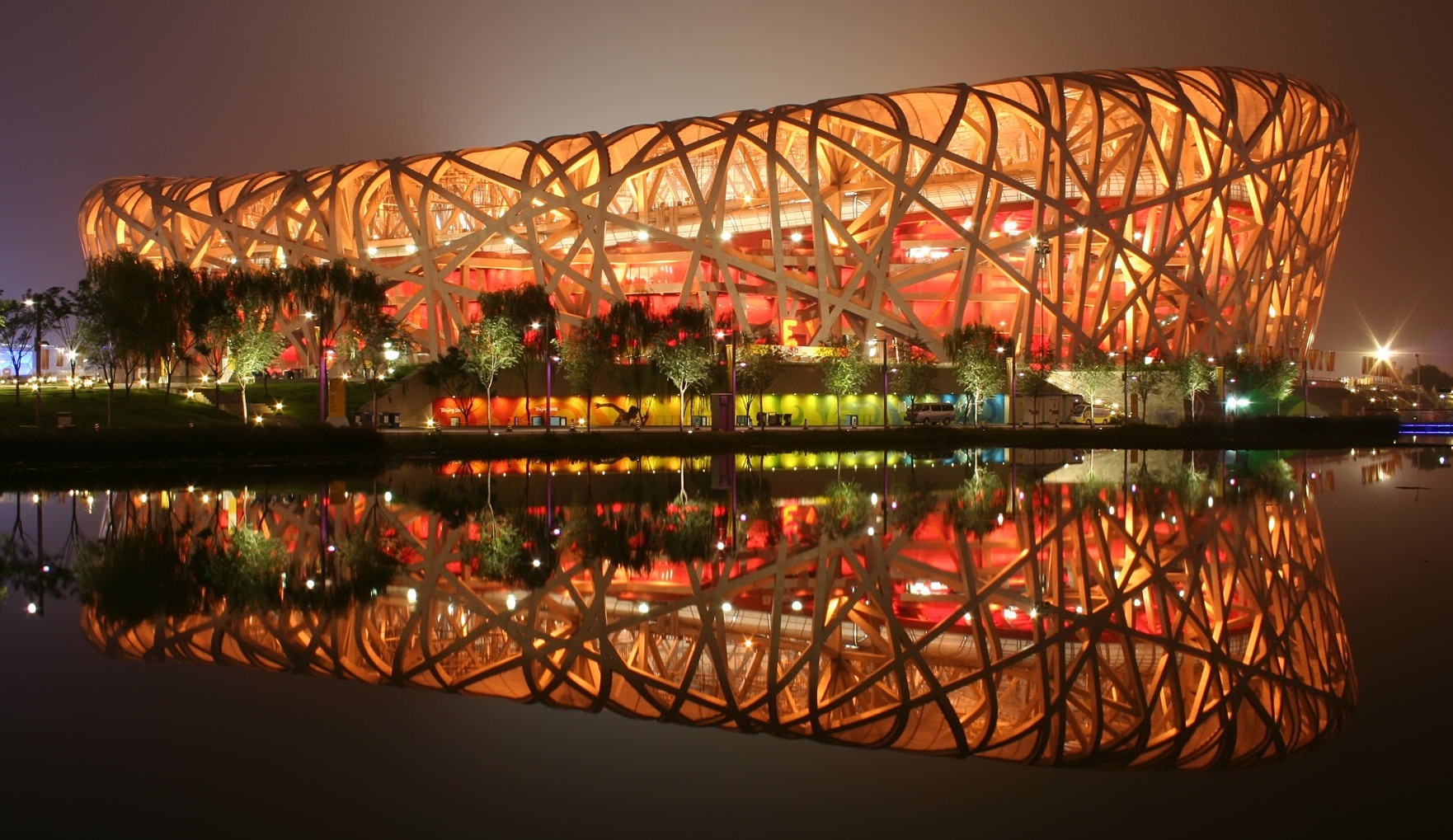
In the early 2000s Beijing prepared for an event meant to be seen everywhere. Streets were widened. Districts reshaped. A new stadium was planned on open ground in the north of the city. It was not designed to belong to one club or one neighborhood. It was built to face outward.
The Birds Nest Stadium Beijing emerged at a moment when the country was stepping into full view. Not through words or promises, but through structure and organization. What followed over the next twenty five years would turn this building into something more than an Olympic venue. It became a fixed point through which changing priorities and ambitions can be traced.
Entering the world stage
In July 2001 Beijing erupted in celebration. Fireworks lit the sky and people gathered around televisions in streets and shops. The city had just been awarded the 2008 Olympic Games. Chinese media described the decision as long awaited recognition after years of effort.
Only months later China formally joined the World Trade Organization. That organization governs global trade rules and provides a framework for resolving disputes between states. Membership offered China more predictable access to markets and formal participation in a system shared by the world’s major economies. Inside China this was presented as a step that confirmed years of reform, rather than a sudden change in course.
The Olympic decision was not presented as a reward. It was described as a challenge. Internationally, many saw the choice of Beijing as a way to bring China closer into sight. Under the eyes of the world. Hosting the Games would mean constant attention. Inside China the focus lay elsewhere. After the celebrations, leaders spoke about the work ahead. They talked about organization, stability and the need to avoid mistakes. Winning the bid was only the first step. The Games were framed as a responsibility that had to be handled carefully.
Both decisions followed the same logic. In the same year China entered a global trading system built on shared rules and accepted the role of host on the world’s largest sporting stage. One dealt with economic integration. The other with visibility. Together they signaled a country choosing to open itself to international systems and observation. That choice shaped what came next. Plans for a new national stadium were drawn up. The stadium was part of a wider Olympic complex in the north of Beijing. From the outset the building was conceived as an international reception point rather than a local ground. It was designed to be approached, seen and broadcast. The Bird’s Nest became the place where China’s new visibility would take physical form.
Setback
In 2004 work on the Birds Nest Stadium Beijing was deliberately suspended. The pause came with a nationwide effort by the central government. China cut back on so called white elephant (prestige) projects trying to cool an economy that was growing too fast. A redesign followed. By removing the retractable roof and simplifying the structure, planners expected to cut costs by up to 1.6 billion yuan. The projected construction budget fell from 3.89 billion yuan to around 2.3 billion. Officials and designers stressed that this was not a retreat from ambition. The form would remain. The building would still look like the nest that had been promised. But in 2004 the project was adjusted to show control and the willingness to correct course. Even at the heart of China’s most visible prestige project.
The 2008 olympics
During the opening ceremony in Beijing in August 2008 the world was watching. International media reacted with astonishment to what Reuters described as an extravaganza of sound, color and precision. Commentators praised the scale and ingenuity of the spectacle, from tightly choreographed drumming to fireworks spread across the city. Greece walked in first and a big cheer arose when the Chinese athletes entered last. The symbolism was deliberate. The Games began on 8 August at 8 p.m., a moment chosen for luck as much as for television. For an estimated global audience of billions the ceremony pushed political controversy into the background. As one broadcaster observed, the organizers were focused on producing images powerful enough to dominate screens around the world.
In the days around the opening of the Games China temporarily adjusted how foreign journalists could work. After criticism and overnight talks with the International Olympic Committee blocks on a number of long barred websites were lifted inside Olympic media centers and in parts of Beijing. Sites from organizations such as Amnesty International, Human Rights Watch and the BBC became accessible to accredited reporters. The change followed earlier promises made during the Olympic bid that journalists would enjoy open internet access. The easing was limited and carefully defined. Many politically sensitive sites remained blocked, and the wider Chinese public did not gain the same access. Chinese officials described the move as honoring commitments to the international community. The openness was temporary, controlled and tied directly to the Olympic moment.
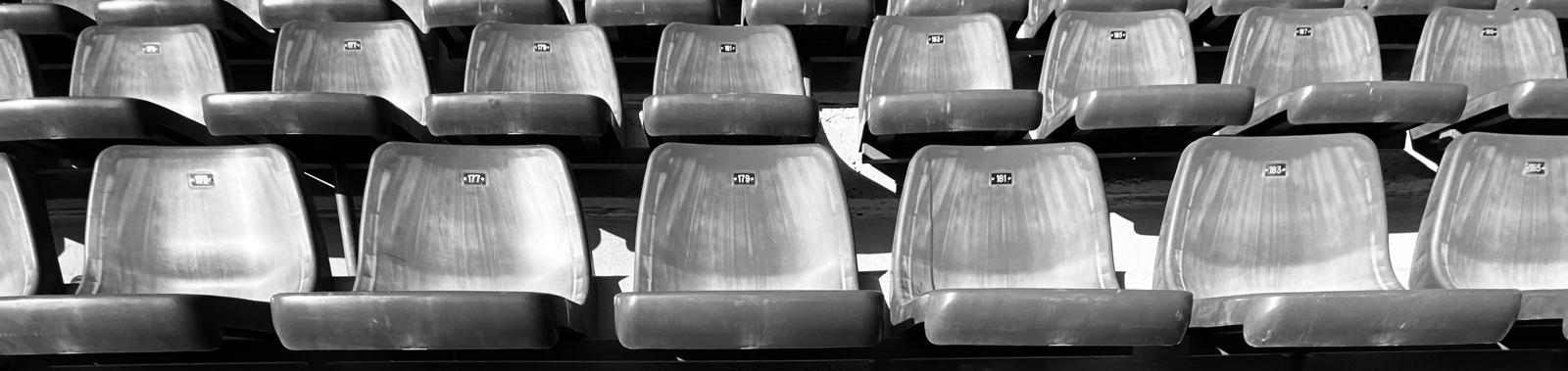
The stadium was conceived first and foremost as a place for people. Its design began with the seating bowl. Shaping the building from the inside out to bring spectators as close as possible to the action. Sight lines were treated as central, whether for athletics during the Games or for future football use. During the Olympic weeks this focus gave the vast spectacle a human scale. When the ceremonies ended and the cameras moved on, what remained was a stadium built to hold people. In that sense the Games closed with a structure meant to endure beyond the moment that had brought the world to Beijing.
The 2010s
After the Olympic flame extinguished the intensity of 2008 faded. The stadium remained, but the attention that had filled it moved on. In the years that followed China entered a different phase. The rapid growth that had defined the early 2000s began to slow. The focus shifted from expanding as fast as possible to managing what had already been built. International institutions described this as rebalancing, but on the ground it meant something simpler. China was no longer trying to announce its arrival to the world economy. It was learning how to operate within it.
By the middle of the next decade China’s international role was less about spectacle and more about reliability. That change was visible in how Beijing reused its Olympic infrastructure. In 2015 the Birds Nest Stadium Beijing hosted the World Athletics Championships. The event carried none of the symbolic weight of 2008. It was a practical test rather than a statement. Organization mattered more than display. By then the stadium no longer stood for promise. It stood for continuity.
Controversial Games

In 2022 the Birds Nest Stadium Beijing returned to the center of the Olympic stage. The same building that had framed the summer Games fourteen years earlier was used again. This time there was no sense of discovery. The choice signaled continuity rather than renewal. China relied on an existing venue and familiar routines. The emphasis lay on execution and control. The stadium functioned as a platform that had already proven it could carry the weight of worldwide attention.
That attention now arrived in a far heavier climate. The Games took place in the shadow of the Covid-19 pandemic, which had reinforced China’s focus on control and predictability. Beijing 2022 unfolded amid diplomatic boycotts. Also tightened political control in Hong Kong and unresolved concern around the disappearance of Peng Shuai. Several Western governments stayed away while leaving athletes free to compete. China rejected the criticism and accused others of political manipulation. At the same time insisting the Games should not be politicized. The stadium still served as a world stage, but the tone had shifted. Where 2008 carried confidence and expectation, 2022 was marked by tension and endurance under pressure.
Now
By 2025 China no longer speaks about arrival. It speaks about condition. Officials describe an economy in transition, moving away from older engines of growth toward innovation and scale. They stress resilience and continuity. Where many outside observers see strain, China presents stability. It frames itself as a constant in an uncertain world. That stance is confident and firm.
What it shows now is not arrival or ambition. It shows condition. A system that values predictability. Structures that are meant to last. The stadium no longer carries expectation. It carries weight. And in doing so, it reflects a country that no longer explains itself through spectacle, but through endurance and use.