Manuel Martínez Valero was the president of Elche CF during the club’s most successful era. Under his leadership Elche reached the Copa del Rey final in 1969, the greatest sporting achievement in its history. After his death in 1988, the city chose to name its stadium in his honour. The Estadio Martínez Valero stands today as a reminder of his ambition to give Elche a stage worthy of its dreams.
In Spain, the city of Elche grows between ancient palms and modern concrete. Its story rooted in both the land and the game. Long before the first palms were planted, the land around Elche was home to the Iberian city of Ilici. Later a Roman colony with fields of grain, olives, and vines watered through small channels by hand. After the fall of Rome, Ilici lost much of its vitality. Fields were abandoned, irrigation channels fell into disrepair, and the settlement shrank into a shadow of its former self. Centuries later, new settlers would return to the dry land and bring it back to life.
Palmeral of Elche
What began as an agricultural system became the Palmeral of Elche. Today the largest palm grove in Europe and the enduring symbol of the city. Planted according to ancient patterns that still guide the city’s layout, the grove is more than a landscape. It stands as a living reminder of Moorish creativity and care for the land. Its network of channels and palms has survived for over a thousand years, continuing to shape daily life and the identity of Elche.
For centuries life in Elche unfolded beneath those palms. Families worked the orchards, found shade in their lines and built their homes along the edges of the grove. The palm fields became part of daily rhythm rather than background scenery. As the city grew, workshops and factories rose beside the trees, yet the palms remained its quiet frame. By the time Elche CF was founded in 1923, the grove was already woven into the city.
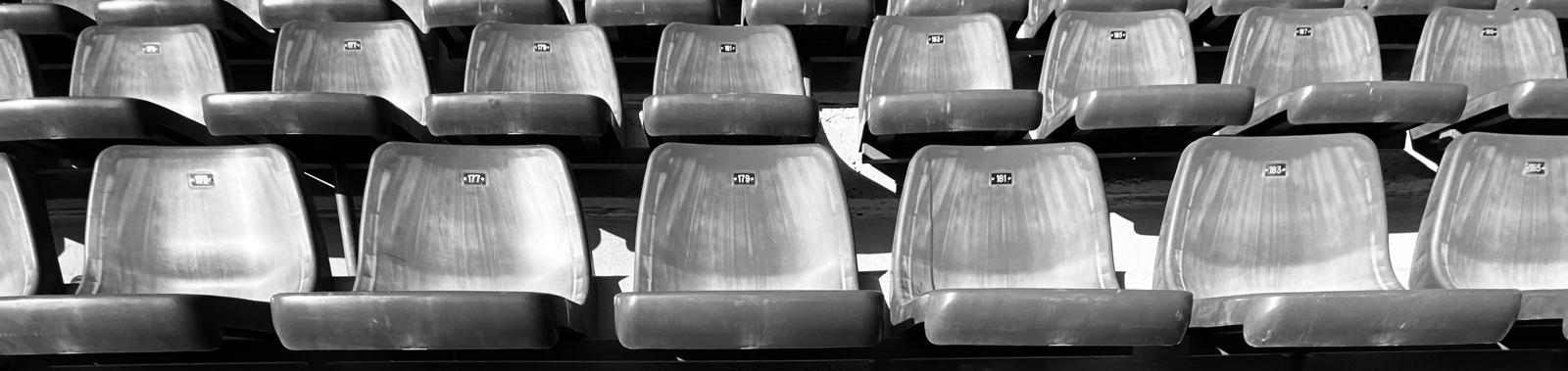
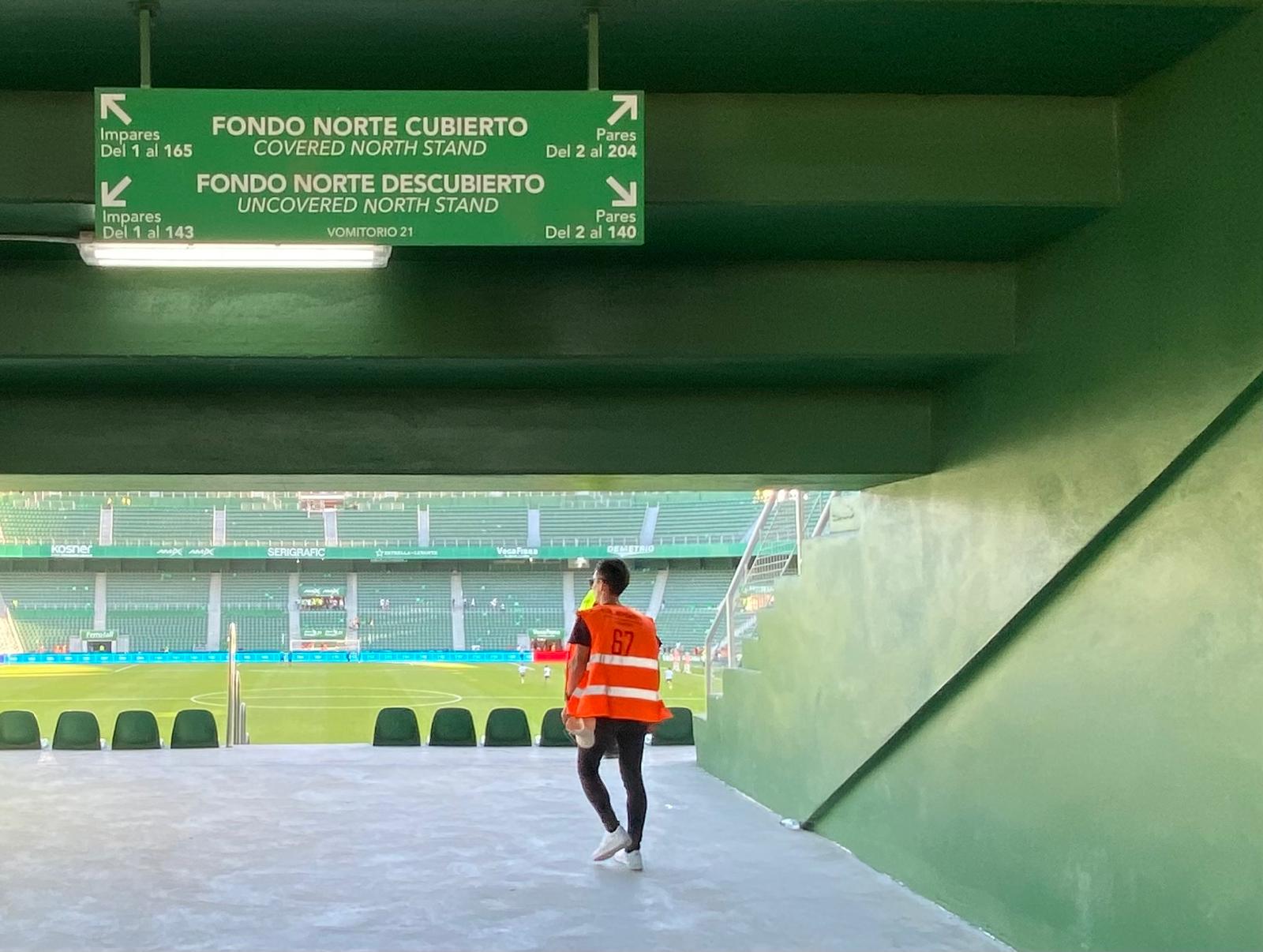
In the middle of those palm trees one can now find the Estadio Martínez Valero Elche. The concrete arena as Elche’s modern landmark. In one of its many returns to La Liga, the club has had a wonderful first half of the season in 2025. Their stadium is filled with energy now that they can measure themselves with the Spanish football elite. To understand what this stadium truly means, one has to know the man whose name it carries.
Manuel Martínez Valero
Manuel Martínez Valero was president of Elche CF during its golden years. Under his leadership the club reached the Copa del Rey final in 1969, the biggest achievement in its history. The result was defeat, but the journey proved that Elche could stand alongside Spain’s giants.
Valero was more than a football man. He was a civic figure who believed Elche deserved a stage that matched its ambitions. He wanted to lift Elche’s profile and place it on the national map as a city that dared to aspire. Born in 1919 and raised in Elche after moving from Murcia, he built a successful shoe company. Employing hundreds during the city’s industrial growth. Marked by war and hard work, he later entered public life during Spain’s democratic transition. Martinez Valero combined business leadership with political engagement and a lasting commitment to his city’s development.
Building a new stadium was part of that belief. The old Campo de Altabix, charming but small, no longer fit a club that dreamed of permanence in the top division. Built closer to the city centre, the old ground had served its purpose. Valero pushed for something larger and more modern.
The new ground opened in 1976 as the Nuevo Estadio de Elche. Only later, after Valero’s death in 1988, did it take on his name. The concrete bowl became the symbol of his vision. The legacy of a president who wanted his club to look beyond its limits. For supporters, to speak of the Estadio Martínez Valero Elche is to speak not only of a place, but of the man who gave Elche the courage to build it.
team and town
Elche is still framed by the Palmeral. The ordered rows of palms have become the city’s most visible symbol of endurance. Long before football, the Iberian city of Ilici gave this place its first name. Its people are still known today as ilicitanos, a reminder of that ancient heritage. Over centuries the name shifted into Elche, yet the sense of continuity remained. The club reflects the same story, often reshaped by promotion or relegation, but never erased from the map.
The colours green and white express that link between city and club. Green recalls the palm leaves that dominate the skyline, white the brightness of the Mediterranean sun. Chosen in the 1920s, they were not invented for football but taken directly from the city’s own symbols. Wearing Elche’s shirt is to wear its landscape, a simple but powerful declaration of identity.


In this way Elche CF mirrors the character of its people. The city is not the richest or the largest, but it has survived by adapting. Just as the palms survive by finding water in dry soil. The club is the same. It may move up and down the divisions, but it continues to endure, carrying forward the values of resilience, patience and quiet pride that define Elche itself. The stadium, with more than 30,000 seats, is strikingly large for a city of around 230,000 inhabitants. It was built in an era when capacity was seen as a measure of ambition. A way for Elche to show it belonged among Spain’s footballing elite.
The Estadio Martínez Valero Elche is a stadium that says as much about its city as about its club. Built on the edge of Elche and surrounded by car parks, it reflects a modern vision of football from the 1970s. A contrast to inner-city grounds like Mestalla in Valencia, where the terraces rise directly out of the streets. Six years after its opening it hosted matches at the 1982 World Cup. A reminder that this provincial ground once stood on the world stage.
Today its atmosphere sets it apart. The terraces are not a place of hostility but of community, where supporters gather with families and friends. Green and white scarves recall the palms that surround the city, and the size of the arena still surprises visitors who know little about Elche CF. To visit the Estadio Martínez Valero Elche is to see football rooted in a place and its history. Just as the Palmeral has endured since the Moors, the stadium endures as the city’s modern landmark. Concrete and palms, team and town. In Elche they belong together.