In the summer of 1936 Barcelona prepared for thousands of athletes together. Together for a festival of open and inclusive sport. The People’s Olympiad was planned as an alternative to the fascist Games in Berlin. Becoming a symbol of hope during a tense moment in European history. Visitors were expected from across the continent with a city ready to welcome them. It was canceled only days before due to the start of the Spanish Civil War
City on edge
Spain entered 1936 with a tense and restless mood. The Popular Front won the elections, yet the country stayed deeply divided. Violence in the streets and political trust was low. Foreign correspondents described Spain as a country marked by rising tension and sudden mood shifts. A nation trying to move on from years of political violence, economic strain and social unrest
Barcelona carried this tension in a way shaped by its own past. For decades the city had been home to strong workers’ unions and shared action. Newspapers like Solidaridad Obrera told stories of strikes, protests and everyday struggle. Workers met in crowded cafes and busy streets where these ideas traveled fast. Growing neighborhoods brought new voices from factories and workshops. The city felt alive, held together by the energy of people who knew how to stand together.
Reaching the summer months the signs of unrest became more visible in Barcelona. Violence had increased across Spain after the elections earlier that year and this rise also reached the city. Political groups clashed in the streets and the police struggled to keep order. Daily life continued but many residents felt that the situation could change at any moment.
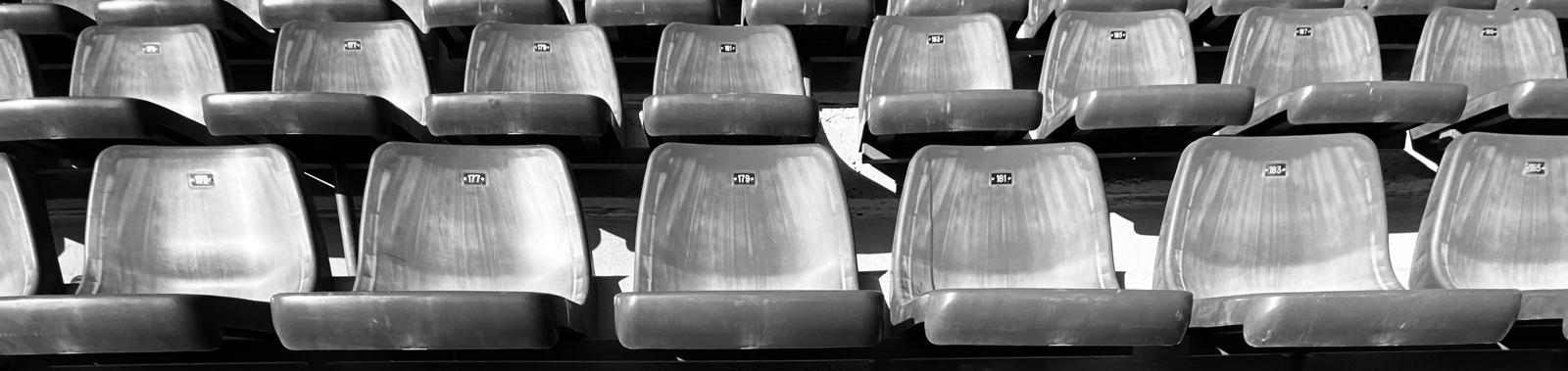
Montjuic stood quietly above it all. The hill carried the large stadium built for the 1929 World Exposition. It was a modern symbol of a city that wanted to be seen by the world. Crowds gathered there for sport and celebration. In 1936 it waited again for people to fill its stands, unaware of how quickly everything around it would change.
Different games

Estadio Montjuïc waited for its next event as the summer moved closer. People in Barcelona continued with their routines. Yet outside Spain attention shifted toward a changing Europe. Many countries watched the rise of fascist power and felt uneasy about what the year might bring.
Governments in Germany and Italy used sport to promote their authority. The Olympic Games in Berlin 1936 became part of that effort. International newspapers reported on strict control around the event. This left many athletes and sporting groups uncertain about taking part. They wanted a place to compete without supporting political displays or propaganda.
Across Europe a different view of sport had grown over the years. Workers associations and local clubs believed that sport should be open to everyone. They organized competitions in factories, public fields and neighborhood centers. They saw sport as a social activity that brought people together. As political pressure increased the movement gained momentum. Eventually leading to the idea of having a Workers Olympiad hosted in Barcelona. An international festival of sport created as an open and inclusive alternative to the official Olympic Games.
Earlier alternative Olympiads where held in Prague, Frankfurt an d Vienna. After Barcelona soon became the preferred host for this plan. The city had a long tradition of collective action. Many residents were active in unions or local clubs. Its neighborhoods had strong networks that could help with organization. Catalonia’s political culture favored participation and equality. Organizers also saw Montjuïc as a useful setting because the stadium was ready to welcome crowds and international teams.
Preparations slowly took shape. Some delegations had already chosen athletes and booked places to stay. Hotels prepared for visitors and volunteers in Barcelona offered their help. The city hoped to show that sport could unite people during a difficult moment in European history.
The way to Barcelona
Teams from across Europe prepared for their journey to Barcelona as the summer of 1936 approached. They came from factory clubs, community fields and workers associations that believed sport should bring people together. Traveling newspapers from France, Norway and Belgium wrote about this unusual mix of athletes. It describes how trains filled with young workers, students and exiles traveled toward Barcelona. They saw the city as a meeting place rather than a stage for medals.
Among the delegations moving towards Barcelona none carried a more personal meaning than a group of German exiles. They were athletes who had fled their homes after rising fascism. Not able to join their teams in the Berlin Olympics. Who no longer had a place in the official sporting world. Many had trained in cities like Berlin and Hamburg before being forced to leave. They saw the People’s Olympiad as their chance to show that another Germany still existed. They traveled with borrowed kits and simple luggage. Some of them arrived in Barcelona only hours before conflict.
Conflict
Barcelona moved through the final days before the planned opening with a sense of rising excitement. Flags and welcome banners appeared on balconies near Plaça d’Espanya. Volunteers rehearsed the routes that visiting delegations would take. Local papers printed the programme for the parade and shared small stories about the teams already in town. The city felt ready for something bright and open before anyone realized how fragile that moment was.
The calm in Barcelona faded quickly. Cafés grew quieter and people spoke in short, guarded sentences. Guides who helped foreign delegations canceled meetings without giving reasons. Some streets emptied earlier than normal and trams were half full. Historians who studied these days describe a city that sensed trouble even before the first shot was fired.
The change came before sunrise on July 19th. Athletes woke to gunfire in the lower districts. Smoke rose above rooftops and hotel staff told visitors to stay inside. Some teams tried to reach the harbor but found the roads blocked by fighting. The celebration planned for Montjuic disappeared in a single morning as the city slipped into open conflict.

The fighting began and the volunteers who had prepared to welcome athletes shifted overnight into helpers and guides. They tried to support people in a city that had suddenly become uncertain. They brought people into safer buildings, shared food and passed news through crowded corridors while the streets outside filled with barricades. Several athletes joined them in these first hours. Trying to support the defense of the neighborhoods using whatever tools they had. Reports collected by historians describe American boxers, German and Italian exiles and local workers moving together through the damaged streets. Others waited for escape routes to open. Organizers worked to lead foreign teams towards the harbor or the mountain passes.
On July 19th 1936 military rebels launched coordinated uprisings across Spain in an attempt to overthrow the Republic. In Barcelona the insurgents were pushed back by loyal troops and armed workers. Turning the city into one of the first places where the coup collapsed. The following days confirmed that the uprising had failed in Catalonia. Plunging the rest of the country into a civil war.
News of the failed coup and the canceled Games traveled quickly across Europe. Newspapers in France, Britain and Scandinavia reported on athletes who had been caught in the fighting. And on others who fled the city as soon as safe routes opened. Workers sport federations released statements of support and described the Popular Olympics as a symbol of shared ideals cut short by violence. The sudden cancellation of the event turned into a moment covered all over the world.
Alfred Chakin traveled to Barcelona in 1936 as a young American athlete ready to compete in the People’s Olympiad. When the fighting started he stayed with other foreign athletes in their hotel until safe movement was possible. What he saw in the streets made a lasting impression. According to his later biography he returned to Spain the following year with his wife, Jennie Berman Chakin. She worked with displaced children while he joined the Republican forces as a quartermaster in the Mackenzie Papineau Battalion. He served on the Aragon front until March 1938 when he was captured by Nationalist troops and executed.

A stadium in silence
And so Montjuic stayed empty because of the start of the Spanish Civil War. The stands that were ready for thousands remained silent. The city below faced fear and confusion as street battles broke out. People moved across the hill only when they needed a safer route or a clearer view of the harbor. The stadium became a quiet witness to a moment that stopped before it began.
Over the long decades that followed the stadium slowly took on a different meaning. New ideas appeared and disappeared as the city changed. When the stadium was renewed for the Olympic Games of 1992 it stepped onto the world stage at last. The memory of 1936 remaining in the background. The hill now carries both stories, the dream that never opened and the one that finally did.