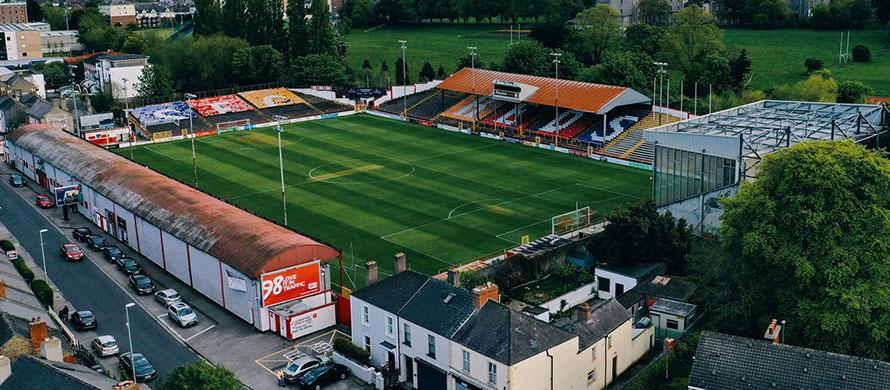
In October 2016 Shelbourne made a decision that seemed to settle the future of Tolka Park. The club would leave the stadium it had called home since 1989 and move three kilometres west to a rebuilt Dalymount Park. There, Shelbourne would share a new municipal stadium with Bohemian FC. Tolka Park, meanwhile, was expected to disappear.
A difficult decision, but not unreasonable. Tolka was ageing and Shelbourne believed there was little prospect of finding the investment needed to rebuild it. Dublin City Council was already planning a major redevelopment of Dalymount and saw an opportunity to solve two infrastructure problems at once. Instead of maintaining two old football grounds on Dublin’s northside, the city could concentrate its resources on one modern stadium.

The plan remained alive for years. Bohemians would temporarily move to Tolka while Dalymount was rebuilt. Shelbourne would then join them when construction finished. The land at Tolka could be redeveloped and part of its value used to help finance the new stadium.
There was a clear logic to it. Yet the plan also depended on treating Tolka Park largely as a problem that could be removed. Over the following years, a group of supporters and local residents began asking a different question. What if Dublin could improve Dalymount without losing Tolka at all?
Less than a decade later, that is effectively what the city chose to do.
Two grounds, one modern solution
Dalymount Park and Tolka Park are separated by little more than a half-hour walk. Dalymount sits in Phibsborough. Tolka lies beside the river in Drumcondra. Both are old football grounds surrounded by a city that developed around them. By the middle of the 2010s both required substantial improvement.
For Dublin City Council, combining their futures offered obvious advantages. The council acquired Dalymount in 2015 and took control of the remaining interests in Tolka the following year. A rebuilt Dalymount could then become a municipal stadium rather than simply the home of Bohemians.
Shelbourne accepted that reasoning. In its 2016 announcement, the club said Tolka was increasingly showing its age and that investment for redevelopment was unlikely to arrive. Moving to Dalymount offered modern facilities without asking Shelbourne to finance a new stadium itself.
That mattered because the club was far removed from its most successful years. Shelbourne had won five league titles between 1992 and 2006, but financial problems followed the last of them. By 2016, the men’s team was playing in Ireland’s second tier and crowds at Tolka could be small. Keeping an ageing stadium alive was difficult to justify when a new home appeared to be available nearby.
The proposed Dalymount redevelopment changed several times, but the basic idea survived. Dublin City Council’s 2020 capital programme described a 6,000-seat UEFA Category 3 stadium with community facilities and a public library. Shelbourne and Bohemians would eventually become its two main football tenants.

Tolka was woven into the finances. The council expected redevelopment of its land to contribute around €15 million towards a project then estimated at €35.6 million. This meant Tolka was not simply being replaced by Dalymount. Its disappearance was supposed to help make Dalymount possible.
For several years, that appeared to be where the story was heading. As late as 2021, the redevelopment of Dalymount was still progressing with both clubs attached.
A Dublin Ground
The strongest argument for keeping Tolka Park was not that Shelbourne had always played there. They had not. The stadium had already lived several football lives before the club arrived.
Football was being played at the site by the 1920s. For much of the following decades, Tolka became closely associated with Drumcondra FC. The Drums were once one of the important names in Irish football and their home became a familiar north Dublin venue long before Shelbourne made it theirs.
One evening in 1953 showed what the ground could mean to the game around it. Drumcondra chairman Sam Prole had travelled north to see floodlit football in Belfast and wanted to bring the idea to Dublin. Money was borrowed, lights were installed and on 30 March Drumcondra hosted Scottish club St Mirren after dark. A competitive League of Ireland game under the lights followed a month later.
The lights were not installed only for novelty. Prole saw an opportunity to make Tolka more useful. Boxing, athletics, wrestling and other events could take place there after dark. The stadium was already being treated as something that could serve more than one purpose.
Drumcondra eventually disappeared from football. Home Farm later played at Tolka, while other Dublin clubs used it during different periods. Shelbourne did not settle permanently at the ground until 1989.
Shelbourne itself came from elsewhere in the city. The club was founded around the Bath Avenue area on Dublin’s southside in 1895 and moved between several homes before eventually settling in Drumcondra. Tolka became part of Shelbourne’s identity relatively late in both the club’s life and the stadium’s.
That made the threatened loss more complicated. Tolka Park was not important because one club had always called it home. Its value came partly from the opposite. Different generations of Dublin football had passed through the same ground.
By 2016, however, history alone was not enough to keep it. Tolka was ageing, difficult to expand and surrounded by existing streets and houses. For Dublin City Council, moving Shelbourne to Dalymount still looked like the cleaner solution.
A campaign to save Tolka
Opposition to the move had existed from the beginning. Some Shelbourne supporters rejected the idea of leaving for Dalymount, where Bohemians already had generations of history. Yet for several years, that resistance did little to change the official plan.
The debate shifted in 2021 with the launch of Save Tolka Park. The campaign brought together supporters, local residents and others who wanted the site to remain in public sporting use. Their argument was not that Dalymount should be abandoned. It was that Dublin could invest in Dalymount without removing Tolka.
The campaign could support a better future for Bohemians while making a separate case for Drumcondra. Tolka was presented not only as Shelbourne’s home, but as public land that could continue serving football and the surrounding community.

The campaign also became visible outside football. In March 2022, a fundraising night at the Button Factory brought together music and stories connected to the ground. Dublin musician David Balfe, who performs as For Those I Love, was among those involved. Tolka carried personal memories for him that had little to do with Shelbourne results.
There was still one major problem. Shelbourne had already agreed to leave.
Change of direction
That changed in February 2022. Shelbourne submitted a proposal to Dublin City Council to remain at Tolka Park and redevelop the site. Six years after accepting the move to Dalymount, the club was now asking for a future in Drumcondra instead.
The circumstances around the club had changed. Shelbourne had returned to the Premier Division, crowds were growing and the women’s team had become an increasingly important part of the club. At the same time, the redevelopment of Dalymount was becoming more expensive and complicated.
The original plan depended on three things happening together. Tolka Park would be sold, Shelbourne would move to Dalymount, and the value of the Tolka site would help fund the redevelopment. By 2022, each part of that plan was under pressure. Shelbourne now wanted to remain in Drumcondra, opposition to selling Tolka was growing, and the Dalymount project had become more expensive and difficult to deliver.
Dublin City Council’s plans soon reflected that new reality. Shelbourne stepped away from the proposed groundshare, while Dalymount continued as a redevelopment centred on Bohemians. Tolka Park, meanwhile, was no longer simply land waiting to be sold. Its future had become a separate question for the city.
Dublin had once planned to replace two ageing grounds with one rebuilt stadium. Now, it was moving towards a future in which both Tolka Park and Dalymount could remain part of the city.
A Future For Tolka
Dublin City Council approved a 250-year lease for Tolka Park, securing the future.

The agreement did not mean Tolka would remain unchanged. Shelbourne committed to improving the stadium and expanding its community role. The site would remain dedicated to sporting use, while the club would invest in facilities and community football programmes.
Some improvements had already begun. During 2024, capacity increased to around 5,750. Safe standing was added, the Ballybough End expanded and parts of the stadium were repaired or upgraded.
The larger challenge remained. Tolka is still small, restricted by its surroundings and difficult to modernise. Accessibility, safety, hospitality and European requirements all place demands on a ground built for another era.
In May 2026, that next phase received a major boost when €9.2 million in funding was approved for Shelbourne and the Tolka Park Community Hub project. Plans connect redevelopment of the stadium with wider community use, including facilities for young people, families and people with disabilities.
More than keeping an old stadium
By 2026, the question around Tolka Park had changed. For years, the debate had been about whether Shelbourne should leave and whether the ground should disappear. Now the challenge was whether an old stadium in Drumcondra could still host the kind of football its supporters wanted to see.
Tolka remained small and its facilities still fell short of some modern European requirements. Even during Shelbourne’s 2026 European campaign, there was no guarantee that the club would be allowed to play its biggest home games there.
Ahead of the Conference League tie with Ajax, Shelbourne needed permission from UEFA to remain at Tolka. The ground did not normally meet the requirements for that stage of the competition, and moving the fixture to Tallaght Stadium or the Aviva remained a real possibility. UEFA eventually granted special permission after Shelbourne carried out the required work.
Ten years earlier, Shelbourne had accepted that nights like this would eventually belong somewhere else. Tolka Park was expected to disappear and the club would move to Dalymount. Instead, Ajax walked onto the pitch beside the River Tolka.
The ground still needs work. Its redevelopment has only begun. But after years spent arguing over whether Tolka Park should survive, Shelbourne were able to bring European football back to the stadium people had fought to keep.