Ten Cent Beer Night began as a cheap promotion in an oversized stadium. By the ninth inning, Cleveland had lost control of the field.
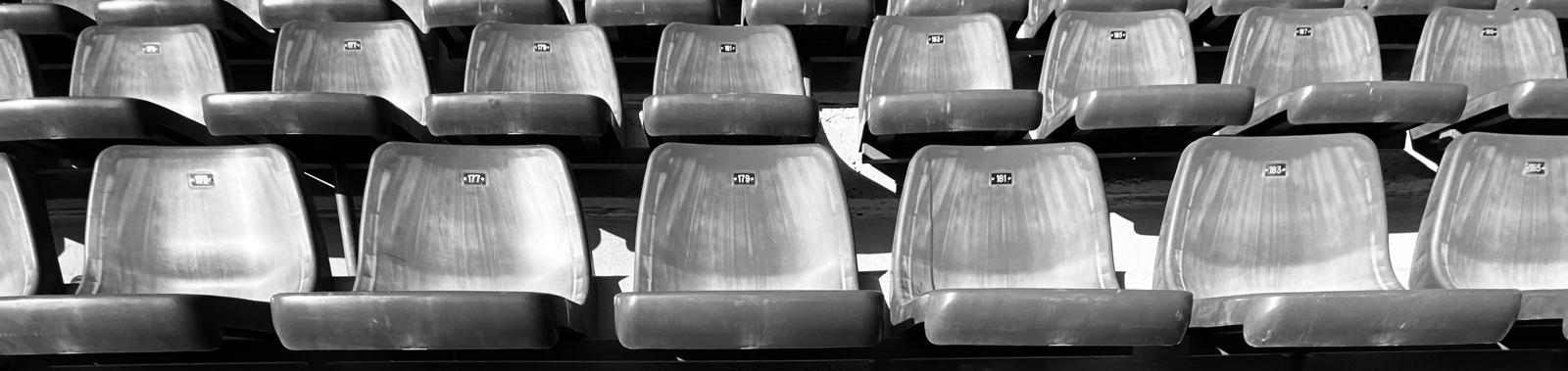
Ten Cent Beer Night began with a simple problem in early-seventies Cleveland. The Cleveland Indians had a stadium that could hold more than 78,000 people, but on most evenings thousands of seats remained empty.
The club needed a reason for people to come back. On 4 June 1974, it offered one. Beer for ten cents.
The price was almost impossible to ignore. A normal cup at Cleveland Stadium cost 65 cents. On this night, supporters could buy six cups at once and then return for more. More than 25,000 people came to watch Cleveland play the Texas Rangers.
But this was not just a cheap drinks promotion. The two teams had fought six days earlier. A local radio host had helped turn the rematch into a matter of civic pride. The stadium had too little security for the crowd it had invited.
Cheap beer alone could loosen a crowd’s grip on restraint. In Cleveland, it met a rivalry that was already waiting to boil over.
A stadium too large for its crowds
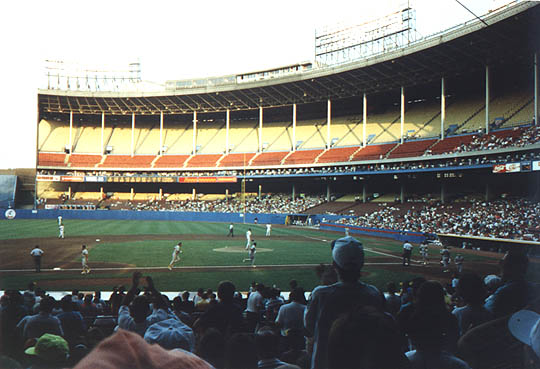
Cleveland Municipal Stadium opened beside Lake Erie in 1931. It stood on land reclaimed from the water, built with public money after Cleveland voters approved the project. At the time, it was one of the largest outdoor stadiums in the world.


The building was designed to be more than a baseball ground. It hosted American football, boxing, concerts and religious gatherings. Its size made it impressive, but also unforgiving. Even a crowd of 20,000 could look small inside it.
Baseball games often stretched across an entire evening. Supporters moved between their seats and the concession stands while the innings continued below. For Cleveland, that slow rhythm had once played out in front of enormous crowds.
More than 2.6 million people attended during the championship season of 1948. By the early 1970s, many of those seats stood empty.
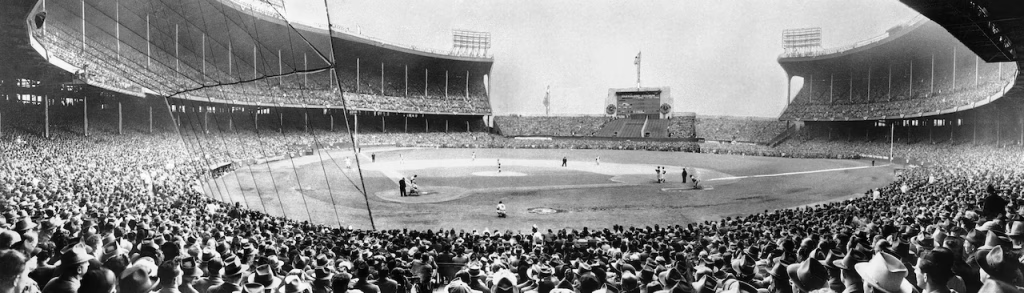
The team lost 102 games in 1971. Two years later, Cleveland had the lowest attendance in Major League Baseball. The club still played at the highest level of the sport, but its home often looked as if something much smaller was happening inside.

Promotions became a way to make the old stadium feel alive again. The club tried spectacle. A tightrope walker crossed part of the stadium. Daredevil Evel Knievel appeared. Cheap beer had already been offered during an earlier Cleveland game without serious trouble.
Other baseball clubs also experimented with discounted beer, but some used tokens or strict two-drink limits. Cleveland chose a looser system. A customer could buy six cups in one visit, and there was no effective limit on how often that person could return.
The rule limited the purchase. It did not limit the night.
The fight that followed Cleveland home
The opponent was the Texas Rangers. Cleveland had played them in Arlington only six days earlier, in a game that also included cheap beer and ended with anger on the field.
The trouble began when Texas player Lenny Randle collided with Cleveland’s Jack Brohamer while trying to break up a play. Cleveland saw the collision as unnecessarily aggressive. Later in the game, pitcher Milt Wilcox threw behind Randle’s head. Randle answered by tapping the ball forward and running into Wilcox.
Players left their team areas and fought on the field. When Cleveland’s players returned to the dugout, Texas supporters threw food and beer at them.
The match ended, but the argument did not. Reporters asked Texas manager Billy Martin whether he expected trouble when the teams met again in Cleveland. Martin joked that Cleveland did not have enough fans to worry about.
The remark reached Ohio. Local radio host Pete Franklin spent the days before the rematch discussing the fight and urging Cleveland listeners to show Texas that their city did have supporters.
By the time the Rangers arrived at Cleveland Stadium, the promotion was no longer just a marketing idea. It had become part of a rematch.
Ten cents per cup
A normal beer at Cleveland Stadium cost 65 cents. During the promotion, a person carrying two dollars had enough money for twenty cups.
The official attendance was 25,134. Cleveland Magazine later estimated that around 60,000 cups were served. That average included children, people who did not drink and supporters who drank far more than everyone around them.
Some had already been drinking before they entered. Others returned again and again to the sales points. Long queues formed around the concession stands, and workers struggled to keep control of demand.
As the evening wore on, beer was poured directly from trucks behind the outfield. Some workers were pushed away from their positions. Parts of the supply were no longer properly controlled.
The riot did not begin with one clean moment. Control left the stadium slowly. It became harder to keep people in their seats, harder to protect the field and harder to continue the game as if nothing around it had changed.
The game becomes secondary
Texas outfielder Tom Grieve hit a home run in the second inning. Soon afterwards, a woman entered the field and approached umpire Nestor Chylak. Security removed her, but the barrier between crowd and game had already been crossed.
Grieve hit another home run in the fourth inning. As he rounded the bases, a naked spectator ran onto the field and slid into second base. Later, two more men crossed the outfield wall and exposed themselves. Firecrackers exploded in the stands.
The early interruptions were foolish more than dangerous. Then the mood sharpened. Cleveland batter Leron Lee struck Texas pitcher Ferguson Jenkins with a hard line drive. While Jenkins lay on the ground, some people in the crowd cheered.
When Billy Martin argued with an umpire, beer was thrown towards him from the stands. Martin responded by blowing kisses at the crowd. Every small confrontation made the next one easier to imagine.
People kept crossing the field. Stadium announcements asked everyone to remain in the stands. Security officers removed some intruders. Others escaped back into the crowd.
Baseball continued around the interruptions. Texas led 5-1 before Cleveland reduced the deficit. By the ninth inning, Cleveland was still behind but not finished.
The ninth inning breaks open
The final inning should have belonged to the game. George Hendrick began Cleveland’s rally with a double. Three pinch-hitters reached base. John Lowenstein brought home the tying run with a sacrifice fly.
The score was 5-5. Cleveland had the possible winning run on second base. One good hit could have turned the promotion into a strange but successful home victory.
Instead, a spectator climbed over the outfield wall and ran towards Texas right fielder Jeff Burroughs. He tried to take Burroughs’ cap. Burroughs fell during the confrontation. From the Texas dugout, Billy Martin believed his player was being attacked.
Martin told the Rangers to take their bats and go after Burroughs. The team ran onto the field. Then hundreds of spectators followed from the stands.
Some carried cups, bottles or pieces of stadium furniture. Others pulled up bases or picked up whatever they could find. Cleveland’s players left their own dugout too, but not to join their supporters. They crossed the field to help the Rangers.
The two teams had fought each other six days earlier. Now they stood together against people from the stands.
Fifty security officers and two police officers
The stadium security force included around fifty officers. Only two off-duty Cleveland police officers were initially working inside the ground. That was not enough for more than 25,000 spectators, especially once people entered the field from different directions.
Additional police were called. The Associated Press reported that patrol cars responded while fights continued across the playing surface.
Cleveland pitcher Tom Hilgendorf was hit by a metal folding chair and suffered a cut to his head. Burroughs injured his thumb. Chylak was also hurt. Players pushed through the crowd with bats in their hands, trying to reach the dugouts together.
The Rangers could not safely return to the field. Chylak stopped the game and awarded Texas a victory by forfeit. The official score became 9-0 to the Rangers, even though the scoreboard had been tied at 5-5.
Cleveland had completed the comeback. It had placed the winning run on base. None of that mattered once the stadium could no longer protect the game.
Why Ten Cent Beer Night became a riot
Ten Cent Beer Night is often remembered as a simple warning: sell almost free alcohol and a crowd will turn dangerous. That memory is not wrong, but it is incomplete. The beer was central. Six cups per purchase allowed people to drink quickly, and weak controls allowed them to return repeatedly.
But the stronger answer is less simple. Other clubs had held similar promotions without riots. Cleveland itself had used cheap beer before without losing control. This night became different because the promotion met a particular place, a particular rivalry and a particular weakness in planning.
The enormous stadium needed life. The club wanted a crowd. The crowd arrived with a reason to drink and a reason to be angry. The security plan treated the evening like a baseball game, while the city around it had begun to treat it like a confrontation.
That is why the story still belongs to a stadium. Cleveland Municipal Stadium did not cause the riot on its own. Yet its empty scale, its cheap-beer sales points, its open field and its thin line of security shaped how the night unfolded.
Ten Cent Beer Night began as an attempt to fill empty seats. It ended by showing how quickly a stadium can stop being a backdrop and become the thing everyone is trapped inside.