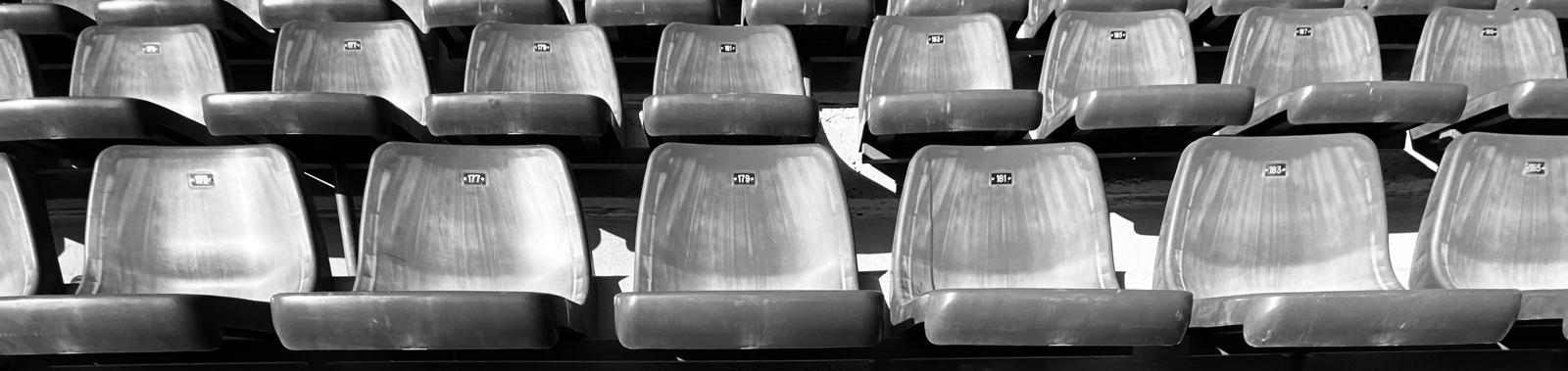
Estadio Azteca stands on the southern edge of Mexico City as one of the most famous stadiums ever built. Few places in world football have seen so many defining moments. The stadium hosted the World Cup finals of 1970 and 1986. It will again welcome the world during the 2026 tournament. It is the only stadium where both Pelé and Diego Maradona lifted football’s most famous trophy.
But Estadio Azteca is more than a stage for historic matches. Its story begins in the rapid expansion of Mexico City during the 1960s. When the country imagined projects on a scale never seen before. From its construction in Santa Úrsula to the triumphs of Pelé and Maradona. This stadium has mirrored the changing history of football itself.
A Stadium Built for a New Mexico
In the early 1960s Mexico City stood in the middle of a period of transformation. Industry expanded and new infrastructure reshaped the country. Economic stability and rising investment allowed governments and private investors to imagine projects on a much larger scale. Cities grew quickly as new roads, factories and public institutions appeared across the country. In this atmosphere a new football stadium became possible. The ambition was not simply to build another venue. The goal was to create one of the largest arenas in the world.
In 1960 several football clubs in Mexico City created the Sociedad de Futbol del Distrito Federal to build a new stadium for the capital. The project united the owners of Club América, Atlante and Necaxa and received financial backing from businessman Emilio Azcárraga Milmo. Several architectural teams were invited to submit proposals. Among them were Pedro Ramírez Vázquez and Rafael Mijares, together with Enrique de la Mora and Félix Candela. The proposal by Ramírez Vázquez and Mijares eventually won the commission. Their design included a large number of private boxes that could help finance construction.
Work began in 1962 on land in the district of Santa Úrsula in southern Mexico City. At that time the area still stood near the outer edge of the growing city. Fields and empty plots surrounded the construction site. Engineers quickly discovered difficult ground conditions and layers of volcanic rock beneath the surface. Large sections of terrain had to be blasted before foundations could be laid. The design introduced a sweeping bowl that allowed spectators to see the pitch clearly from every angle. Wide ramps and spacious entrances were built to guide enormous crowds safely through the structure.

The stadium opened on 29 May 1966 with a match between Club América and the Italian club Torino. Tens of thousands attended the inauguration. President Gustavo Díaz Ordaz arrived late and received the first whistles ever heard inside the new stands. The match itself ended in a draw, yet the result hardly mattered. What captured attention was the scale of the structure rising above the neighborhood. With a capacity approaching one hundred thousand spectators the venue soon became known as the Colossus of Santa Úrsula. Only four years later these same stands would welcome the world.
The World Cup of Pele
In 1970 the arena in Santa Úrsula stepped onto the global stage. The World Cup brought international football to Mexico and transformed the young stadium into the centre of the tournament. It was the first World Cup held in North America. Also the first to broadcast live in colour to a worldwide television audience. For millions of viewers the images from Mexico were unlike anything they had seen before. Football was no longer experienced only inside the stadium. It had become a global spectacle.
Throughout the tournament the venue carried the weight of the competition. Ten matches were played here, including group games, a semi final and ultimately the final itself. The vast concrete bowl was filled from the lowest rows to the highest tiers. When Mexico opened the tournament against the Soviet Union the crowd surpassed 107,000 spectators. The steep design amplified every sound. Television cameras captured not only the players on the pitch but also the immense wall of people rising around them.
The tournament reached its climax on 21 June 1970. Brazil faced Italy in the final, a meeting between two former world champions. Brazil won the match 4–1 in a performance that many still describe as the peak of attacking football. Pelé opened the scoring with a powerful header before Gérson restored Brazil’s lead in the second half.

For Pelé the victory carried special meaning. He had already lifted the World Cup in 1958 and 1962. However, injuries in 1966 had nearly ended his international career. In Mexico he returned as the leader of the team. Many historians still consider the team the greatest national side ever assembled. His header in the final and his calm pass before Brazil’s fourth goal helped secure a third world title. No other player has ever lifted the World Cup three times. In the bright afternoon light of Mexico City Pelé stood on the pitch of Azteca as the king of football.
The summer of Maradona
Sixteen years later the World Cup returned to Mexico City. The 1986 tournament had originally been awarded to Colombia, but economic difficulties forced the country to withdraw. Mexico stepped in as the replacement host and became the first nation to organize the World Cup twice. Even after a devastating earthquake struck Mexico City in 1985 preparations continued. Once again the competition would revolve around the enormous arena in Santa Úrsula.
During the tournament the stadium hosted matches from the opening game to the final itself. The altitude of Mexico City and the intense summer heat shaped the rhythm of the matches. Television audiences around the world watched the scenes from Azteca as they unfolded. Yet the moment that defined the tournament arrived during the quarter final between Argentina and England.

The match was played on 22 June 1986. Only four years had passed since the Falklands War between Argentina and the United Kingdom. Tension surrounding the game reached far beyond football. On the pitch Argentina’s captain Diego Maradona delivered a performance that would become legendary.
In the 51st minute Maradona chased a loose ball into the penalty area. England goalkeeper Peter Shilton rushed forward to clear it. Maradona leapt and used his left hand to punch the ball into the net. The referee did not see the touch and allowed the goal to stand. After the match Maradona famously described the moment as being scored a little with his head and a little with the hand of God. The phrase would follow him for the rest of his life.
Only minutes later the same player produced a moment of extraordinary brilliance. Receiving the ball near the halfway line Maradona began a run that carried him past one defender after another. Over the course of ten seconds he dribbled through the English defence, rounded the goalkeeper and finished the move himself. The goal covered roughly sixty metres and involved five defenders. It remains widely known as the Goal of the Century.
Argentina eventually won the match 2–1 and reached the final in the same stadium. On 29 June Argentina defeated West Germany 3–2 to lift the trophy. Maradona did not score in the final but his decisive assist created the winning goal. By the end of the tournament he had shaped nearly every decisive moment for his team. In the stands of Azteca the stadium that had once crowned Pelé now witnessed another football legend.
A Stadium Between Eras
After the drama of 1986 the stadium did not fade into history. Instead it remained the centre of Mexican football. Club América continued to call the arena home. Turning the vast structure into the stage for some of the most intense rivalries in the country. Matches against Chivas and Cruz Azul regularly drew enormous crowds and filled the concrete terraces with colour and noise. The ground that had witnessed the triumphs of Pelé and Maradona became the everyday theatre of domestic football in Mexico.
The Mexican national team also made the stadium its fortress. Sitting more than 2,200 metres above sea level, the altitude and the immense crowd created an intimidating environment for visiting teams. For Mexican supporters the arena became a place where national pride and football merged. One of the most memorable nights came in 1999 when Mexico defeated Brazil in the final of the Confederations Cup.
Beyond football the venue gradually evolved into a cultural landmark. International tournaments returned, concerts filled the arena and several waves of renovation introduced new screens, lighting and modern facilities. Yet the identity of the structure remained unchanged. In Mexico it is still known as the Coloso de Santa Úrsula. A place where the echoes of past World Cups continue to shape the present.
A Third World Cup
More than half a century after its first World Cup final, the stadium in Santa Úrsula is preparing for another World Cup. The 2026 FIFA World Cup will once again bring the world to Mexico City. Among the many modern venues spread across Canada, the United States and Mexico, one stadium stands out. Estadio Azteca will host the opening match of the tournament on 11 June 2026. Mexico starts its campaign in front of a home crowd. In total the stadium will stage five matches during the tournament.
Preparing the stadium for this moment has required another phase of transformation. Renovation work began in 2024 with the goal of adapting the historic venue to modern tournament standards. New seating, upgraded media areas and modern hospitality facilities are being introduced across the stadium. A hybrid playing surface and new technological infrastructure are also part of the project. Yet the aim is not to replace the identity of the stadium.

When the opening whistle sounds in 2026, Estadio Azteca will move into a category of its own in football history. No other stadium has hosted World Cup matches in three different tournaments. After staging ten matches in 1970. Another nine in 1986 and 5 in 2026 the stadium will have welcomed twenty four World Cup matches across more than half a century. The same pitch that witnessed Brazil defeat Italy in 1970. That watched Argentina overcome West Germany in 1986 will host the world again.
Few stadiums connect generations of the game so directly. In the stands of Azteca the stories of Pelé and Maradona are not distant memories. They are part of the same stage that will receive a new generation of players in 2026. Nearly sixty years after its opening, the stadium remains one of football’s most powerful landmarks. Rather than belonging to a single era, Estadio Azteca stretches across them. It is a rare place where the past, present and future of the World Cup meet.