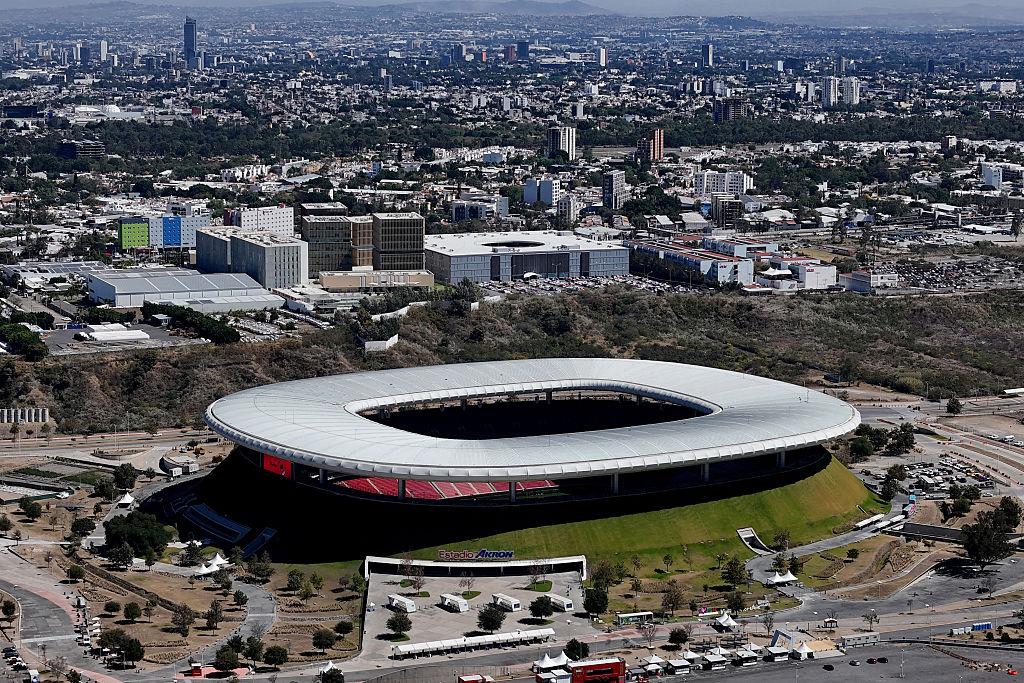
Estadio Akron Guadalajara stands on the western edge of one of Mexico’s fastest growing cities. At first glance it looks less like a stadium and more like part of the landscape. A green hill rises from the ground in Zapopan. Since opening in 2010 the stadium has become the home of Club Deportivo Guadalajara. Its story reflects the ambitions of Chivas, and the changing role of football stadiums in the modern game.
From shared to independence
For decades Club Deportivo Guadalajara played its home matches at Estadio Jalisco. The stadium opened in 1960 and quickly became one of the central football venues in Mexico. Chivas shared the ground with Atlas and other local clubs. The stadium was managed by Clubes Unidos de Jalisco. This meant Chivas did not control the commercial activity around matchdays.

The former Estadio Jalisco
In 2002 businessman Jorge Vergara bought a majority stake in the club. He soon criticised the condition of Estadio Jalisco and the limits of a shared stadium. The venue held over 50,000 people but much of its infrastructure still reflected the standards of the 1960s. Corporate hospitality was limited. Parking relied heavily on surrounding streets. Commercial areas inside the stadium were small. Vergara argued that a club with national ambitions needed a stadium of its own.
At the same time Guadalajara was expanding west toward Zapopan. New housing areas and universities appeared in places that had once been open land. In 2003 the club announced plans to build a new stadium there. Construction began in 2007. The project was completed in 2010. After half a century at Estadio Jalisco, Chivas moved into a new home in Zapopan. The stadium would soon become known around the world as Estadio Akron Guadalajara.
A Stadium Within The Landscape
When the design phase began the club chose an approach rarely seen in football architecture. The project was led by French designer Jean Marie Massaud together with the Mexican firm AVA Arquitectos. Instead of placing a large structure above the landscape the architects designed a stadium that appears to rise out of the ground. The exterior is formed by a wide artificial embankment covered with grass. Around 70,000 square metres of natural grass cover the outer slopes. From a distance the structure resembles a green hill.

Part of the stadium sits below ground level. The pitch lies about 11 metres beneath the natural surface of the site. The soil removed during excavation was used to shape the exterior slopes around the stadium. Only the upper ring of the stands and the roof structure rise above the grassy embankment. The roof is built from a lightweight membrane supported by a steel structure. It appears to float above the open bowl.
The design aimed to create a landscape rather than a monument. Rainwater collected from the roof is reused to irrigate the grass covering the outer slopes. A gap between the roof and the stands allows air to move naturally through the concourses. The stadium covers around 110,000 square metres and holds over 45,000 spectators. Rather than dominating Zapopan, Estadio Akron Guadalajara was designed to merge with the surrounding terrain.
Football Stadiums Become Businesses
During the early 2000s football stadiums began to change. For most of the twentieth century stadiums functioned mainly as public infrastructure. Their role was simple. They hosted matches and large civic gatherings. By the start of the twenty first century many clubs began to view stadiums as commercial assets that could generate revenue throughout the year.
This shift changed the design of new stadiums. Clubs invested heavily in hospitality areas, executive boxes and corporate seating. Estadio Akron Guadalajara reflects this new model. The stadium contains more than one hundred premium suites alongside commercial areas and event spaces. These facilities allow clubs to generate higher revenue from fewer spectators. Similar strategies appeared in European stadium projects like the Allianz Arena in Munich and the Emirates Stadium in London.

For Chivas the move also meant full control over stadium operations. At Estadio Jalisco many commercial rights were shared with other tenants and the stadium association. The new stadium allowed the club and its owner Grupo Omnilife to control advertising, sponsorships and naming rights. The venue opened in 2010 under the name Estadio Omnilife before later becoming known as Estadio Akron Guadalajara.
Preparing for a world cup
In June 2022 FIFA confirmed Estadio Akron Guadalajara as one of the stadiums selected for the 2026 World Cup. During the tournament the venue will temporarily be called Estadio Guadalajara. FIFA regulations do not allow commercial sponsors in stadium names during World Cup matches. The stadium is scheduled to host four group stage matches, including a match involving the Mexican national team.
Preparation for the tournament has already led to several upgrades. The playing surface is being replaced with a hybrid pitch that combines natural grass with synthetic fibres. New high definition screens and an updated sound system are being installed to meet international broadcast requirements. The city of Zapopan is also improving transport links around the stadium area.
A new Macrobus stop and pedestrian routes will connect public transport to the stadium district. What began as a stadium on the expanding edge of the city will soon welcome supporters from around the world.
Today Estadio Akron Guadalajara sits at the meeting point between landscape, commerce and global football. What began as a new home for Chivas has become one of the key stadiums in Mexico’s sporting future. In 2026 the stands will welcome supporters from around the world during the FIFA World Cup. A stadium built to blend into the ground will briefly stand at the centre of the global game.