
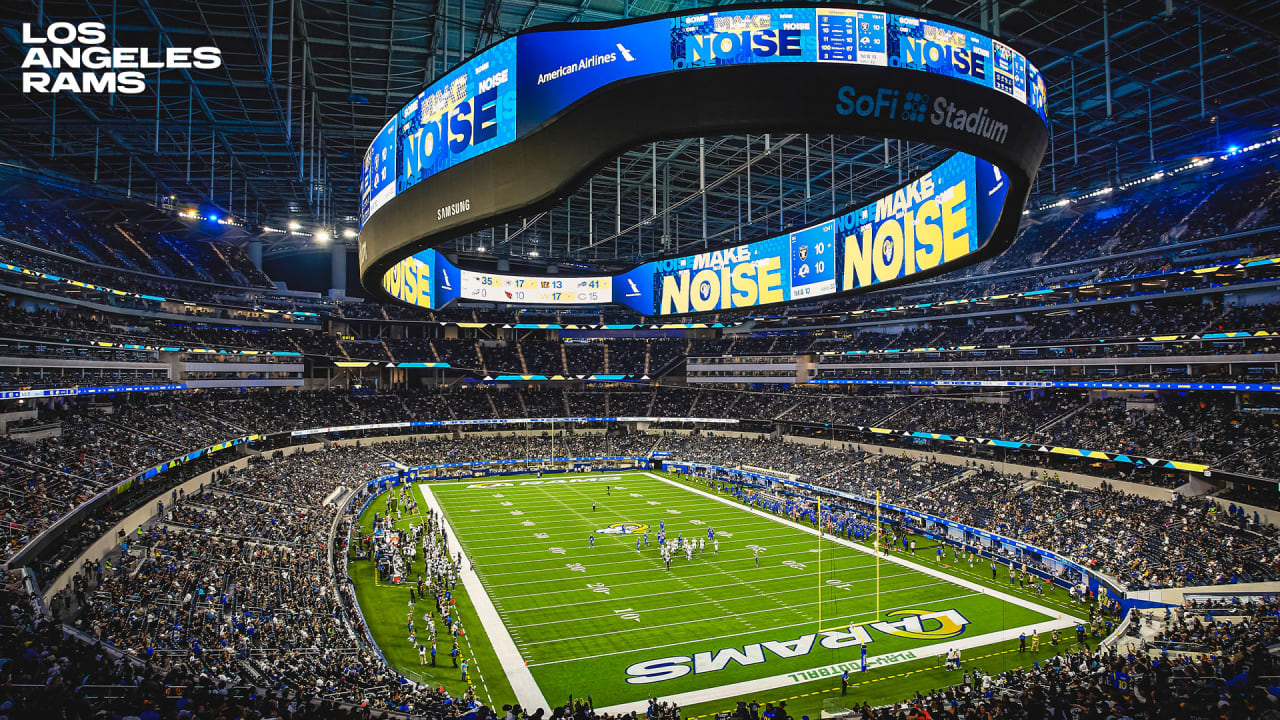
In modern sport, the number often comes before the story. Before the architecture, before the atmosphere, before the first kickoff. In Inglewood, that number was 5.5 billion dollars. It became the home of the Los Angeles Rams and the Los Angeles Chargers. Two NFL franchises sharing one roof beneath a sweeping canopy. But long before the first touchdown, the figure itself had already defined the conversation. A measure of ambition. A test of scale. And a question about what happens when that much capital lands in one place.
Five and a Half Billion Dollars
Around 5.5 billion dollars. The cost of SoFi Stadium in Inglewood, making it widely described as the most expensive stadium ever built. When plans first surfaced in the mid 2010s, projections stood closer to 2.6 billion dollars, with even earlier figures around 1.86 billion. By 2018, internal league projections had climbed to 4.963 billion. In May 2020, months before opening, NFL owners approved an additional 500 million dollars in financing. When the stadium officially opened in September 2020, the total had reached roughly 5.5 billion dollars.
That figure refers to the full stadium complex under its canopy roof. The main bowl, the adjacent YouTube Theater and the central plaza. It does not include the wider Hollywood Park district of businesses and residential units that surrounds it. In its standard configuration, the stadium seats 70,240 people. On that basis, the construction cost equals approximately 78,303 dollars per seat. It is a blunt calculation, but it captures the scale of the investment.
SoFi did not quietly drift over budget. It expanded in public view, growing from an ambitious proposal into something unprecedented. It opened without fans during the pandemic, a 5.5 billion dollar structure waiting for its first full stands. The number sets the tone for everything that follows. If this is the most expensive stadium ever built, the next question is unavoidable. What made a stadium of this scale possible, and what does it change?
Private Money, Public Stakes
SoFi Stadium is widely described as privately financed. The 5.5 billion dollar construction cost did not come from municipal borrowing or traditional public funding. Instead, Stan Kroenke built the stadium through his company Kroenke Sports & Entertainment. He used his own capital alongside large private bank loans and NFL-backed financing.
Both the Rams and the Chargers used the league’s G-4 stadium loan program, contributing about 200 million dollars each. When costs escalated, NFL owners approved an additional 500 million dollar loan in May 2020 to help close the gap. The Chargers share the building under what is often described as a one dollar annual lease. Their real contribution is not rent, but participation in league loans and shared revenues.
The City of Inglewood did not pay to build the stadium. It does, however, earn money because of it. Every ticket sold, every parking space used and every drink poured generates local tax revenue. The first 25 million dollars collected annually from the stadium district stays with the city. Only revenue above that level can be used to repay certain infrastructure costs around the site. Inglewood did not finance construction, but part of its future income is now linked to how well the district performs.
The Bigger Picture
A stadium of this size is not only a place to watch football. It is a financial engine. SoFi signed a naming rights deal worth roughly 625 million dollars over twenty years. That alone averages more than 30 million dollars per season. Personal Seat Licenses generated hundreds of millions before the first kickoff. More than 260 premium suites bring in annual contracts that can reach seven figures. The building does not rely on ticket sales alone. Its margins sit in long term corporate agreements.
But the stadium is only one piece of the picture. It sits inside Hollywood Park, a 298 acre mixed use development built around it. Plans include nearly 900,000 square feet of retail space. Also hundreds of thousands of square feet of offices, up to 2,500 residential units and a 300 room hotel. The NFL has already moved its West Coast headquarters onto the site. The stadium draws attention. The surrounding real estate captures value.
This is where the scale begins to make sense. The 5.5 billion dollars is not only an investment in sport. It anchors a district designed to operate year round. Concerts, the Super Bowl, WrestleMania, the College Football Playoff, the 2026 World Cup and the 2028 Olympic Games all pass through the same roof. The stadium creates the moment. The district monetizes the presence. Profit here is not a single revenue stream. It is a layered ecosystem built to turn global events into long term property value.
Inglewood
Inglewood sits just southwest of downtown Los Angeles, a few miles from LAX and minutes from the Pacific coast. For decades it was known for the Hollywood Park racetrack and for The Forum. The Lakers and Kings once played there. It became a middle class destination for Black families in the second half of the twentieth century. Later developing a strong Latino majority. Today it has just over 100,000 residents and remains majority renter. Long before SoFi Stadium arrived, Inglewood was already a city shaped by sport, migration and regional change.


When the Rams were cleared to return to Los Angeles in 2016, Inglewood was not the same place it had been a decade earlier. The old Hollywood Park racetrack closed. Cranes appeared. Billboards promised something global. In the years that followed, homes that once felt modest in price began selling for numbers that would have seemed unthinkable before the announcement. The stadium did not land in empty space. It landed in a neighbourhood that suddenly found itself on the map. Around it rose Hollywood Park, a 298 acre district of offices, shops, apartments and a hotel. Designed to keep the lights on long after the final whistle.
The Value of Scale
The rise of SoFi Stadium sits inside a longer debate about what stadiums actually do for cities. Economists have argued for decades that new venues rarely generate the sweeping growth their promoters promise. Much of the spending inside a stadium is money that would have been spent elsewhere in the same region. The technical term is the substitution effect. Entertainment dollars shift. They do not always multiply. Research from sports economists consistently shows that broad metropolitan gains are often modest. Benefits concentrate among team owners, leagues and adjacent property interests.
SoFi differs in one crucial respect. It was not built primarily on municipal bonds. It was embedded inside a nearly 300 acre development designed to capture year round real estate value. The stadium draws attention. The surrounding land captures appreciation. Offices, retail, housing and a hotel extend the revenue cycle far beyond game day. In this model, the building is not the final product. It is the anchor.
So was it worth 5.5 billion dollars? From an investment perspective, the structure performs. Franchise valuations have climbed. The district generates activity across the calendar. The city’s taxable value increased during the development cycle. Major global events now pass through Inglewood. The capital found return.
But value depends on vantage point. For homeowners, rising prices created equity. For renters, rising prices created pressure. For city leaders, the project helped stabilize finances. For critics, it accelerated displacement risks in a majority renter community. Five and a half billion dollars did not simply build a stadium. It reset expectations about what scale looks like in a city like Inglewood. Whether that reset feels like progress or strain depends on where you stand when the lights go out.