
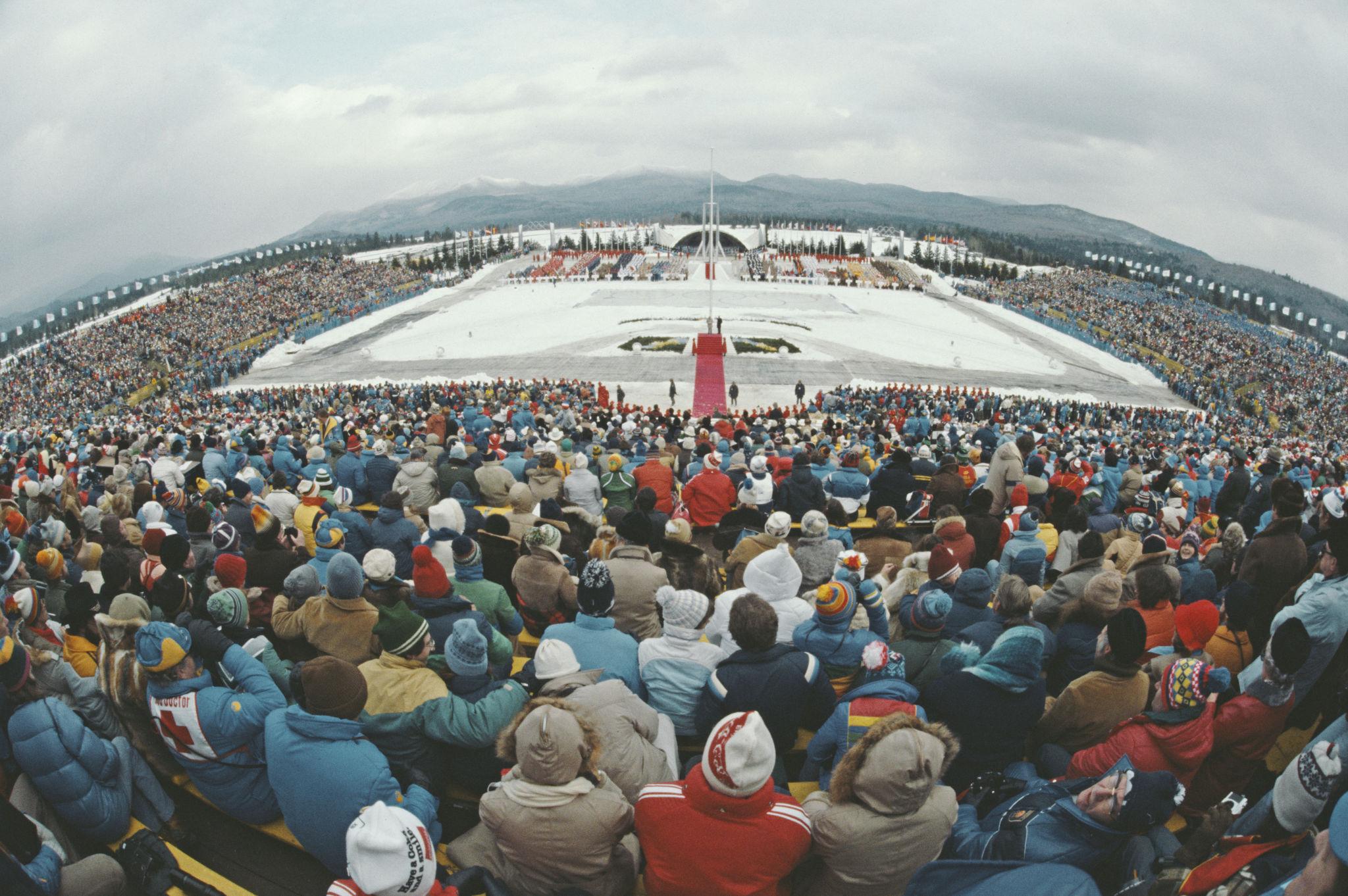
In February 1980 the small village of Lake Placid in the Adirondack Mountains became the center of the sporting world. Snow covered quiet streets. Temperatures stayed far below freezing. Thousands of visitors arrived in a place that normally counted just 2700 residents. The atmosphere felt local and intimate.
Beneath the surface of the winter festival another reality existed. The world was entering a period of intense diplomatic friction. Athletes from the Soviet Union and the United States shared the same ice. At the same time their governments moved closer to open confrontation.
The International Olympic Committee insisted that the Olympic Games were a space for sport alone. They argued politics should stay outside the arena. Lake Placid tested if that vision could survive when global tensions followed the athletes into a small mountain village. This story traces the origins of Olympic neutrality and the moment its limits became impossible to ignore.
Political neutrality at the Olympics
The modern Olympic Games were founded on a specific view of the outside world. Pierre de Coubertin believed sport should encourage international understanding. Competition should focus on individuals rather than states. To protect that idea, the International Olympic Committee established rules designed to separate sport from politics. The aim was to shield the Games from changing government interests. Over time this approach became known as Olympic neutrality.
Across decades these principles were formalized in the Olympic Charter. The document describes Olympism as a movement that places sport in service of harmonious human development. Neutrality became part of that framework. Rule 50 emerged as one of the key instruments. It prohibits political, religious, or racial demonstrations within Olympic venues. The IOC presented the rule as a safeguard to keep attention on athletic performance.
Neutrality also served a practical purpose. It allowed the IOC to operate across ideological divides and to move the Games between different political systems. By claiming political detachment, the organization avoided appearing to endorse any government.
Yet the boundary between sport and politics was never stable. What counted as a political act shifted with time and context. By the late 1970s the gap between written rules and lived experience was widening. As the world turned its attention to Lake Placid, the ideal of neutrality faced a serious test.
A Changing Climate
The geopolitical climate changed rapidly in the months before the Winter Games. Tension eased throughout the 70s. Treaties limited nuclear weapons. Cultural exchange increased. Tensions appeared to soften.
That balance ended in December 1979. The Soviet Union sent troops into Afghanistan to support a communist government. The move triggered alarm across the globe. Many governments viewed the invasion as a violation of international law. Western governments searched for ways to exert pressure without military confrontation. International sport became one of the most visible arenas for symbolic action.
In January 1980, United States president Jimmy Carter proposed a boycott of the Moscow Summer Olympics. Demanding Soviet forces to withdraw from Afghanistan.
“it is very important for the world to realize how serious a threat the Sovietsí invasion of Afghanistan is” – Jimmy Carter in The New York Times, 20-01-1980
Across other regions reactions varied. Some Western European and Islamic countries supported the idea of a boycott. Others argued that athletes should not be drawn into political disputes. The debate revealed how fragile the separation between sport and geopolitics had become.
As the opening ceremony in Lake Placid approached, Cold War tensions had returned to a high level. Athletes prepared to compete while the Olympic movement itself faced the threat of fragmentation.
The World in a Village
Lake Placid was an unusual host for a global event. It was a small village in a remote part of New York State. Its Olympic history dated back to 1932, when it first staged the Winter Games. That legacy shaped local identity and ambition.
The IOC awarded the 1980 Games to Lake Placid in 1974. At the time few cities were willing to accept the financial and environmental risks of hosting. Lake Placid proposed a compact plan built around existing facilities. It offered a village scale Olympics.
The size of the town created a distinctive environment. Venues stood close together. Athletes, officials, media, and residents moved through the same limited spaces. The Olympic Village itself was designed for later conversion into a federal prison. A practical decision that added an unusual undertone to the event.

Logistics were a constant challenge. Narrow mountain roads struggled under heavy traffic. Accommodation was limited. Transport delays became routine. The 1980 bid reflected a belief that a small community could still host the world.

Proximity shaped daily experience. Athletes from rival blocs met in dining halls and on buses. In Lake Placid it was impossible to ignore the presence of political counterparts. Global tensions became personal.
Miracle on Ice
Once competition began, the promise of neutrality became difficult to maintain. Media coverage in both the United States and the Soviet Union framed events in national terms. Victories were linked to strength and ideological success.
The ice hockey tournament became the clearest example. The Soviet team entered as dominant champions, having won four consecutive Olympic titles. The United States fielded a group of amateur college players. The US team miraculously won and the spectacle is remembered as the Miracle on Ice.
The American victory is usually recalled as an unexpected result on the ice. Reporting from the time shows how quickly the game took on a broader meaning. Newspapers and broadcasts framed the result as a moment of reassurance during a period marked by uncertainty and international tension. What happened inside the arena went far beyond sport.
Life inside the Olympic Village reflected similar pressures. Athletes described friendly interactions overshadowed by constant discussion of a potential Moscow boycott. News from Washington and Moscow shaped conversations long after training sessions ended.
Neutrality failed not because of a single decision, but because context overwhelmed control. The IOC could regulate behavior within venues. It could not govern interpretation. Lake Placid demonstrated how public and media narratives can politicize sport regardless of official rules.
Legacy and a changed movement
The closing ceremony did not ease tensions. Instead Lake Placid marked the beginning of a prolonged crisis for the Olympic movement. IOC leadership struggled to preserve unity.
In spring 1980 the United States confirmed its boycott of the Moscow Summer Olympics. Six other countries joined. It became the largest boycott in Olympic history. Four years later the Soviet Union and its allies responded by boycotting the Los Angeles Games. A cycle of retaliation followed, placing the Olympic movement under sustained strain.
In response the IOC began to modernize its governance. Neutrality could no longer rely on silence alone. The organization invested in professional diplomacy and clearer communication to shield the Games from disruption.
Lake Placid 1980 became a reference point long after the snow had melted. Not because rules were broken, but because their limits were exposed. The Olympic Charter continued to speak of neutrality, yet the Games had shown how difficult that ideal was to uphold in a divided world. From that moment on, the Olympic movement no longer treated political pressure as something that could be ignored. Reforms followed, governance changed, and new structures were built to protect athletes and events from state interference. The Winter Olympics in a small Adirondack village revealed that sport does not stand outside history. It moves through it, shaped by the same conflicts it hopes to rise above.
Today Lake Placid is a quiet destination for winter sport. Many venues from 1980 remain in use for training and regional events. The village still carries traces of the moment it hosted the world.
The Winter Olympics of 1980 showed that political neutrality is not a natural condition. It depends on cooperation that cannot always be guaranteed. In Lake Placid that cooperation was strained by Cold War realities.
The Games demonstrated that international sport does not exist in isolation. Between headlines and boycotts stood athletes who trained for years to compete on ice and snow. However, crowd emotion and government strategy inevitably entered and will enter the arena. Neutrality remains an ideal rather than a constant certainty.