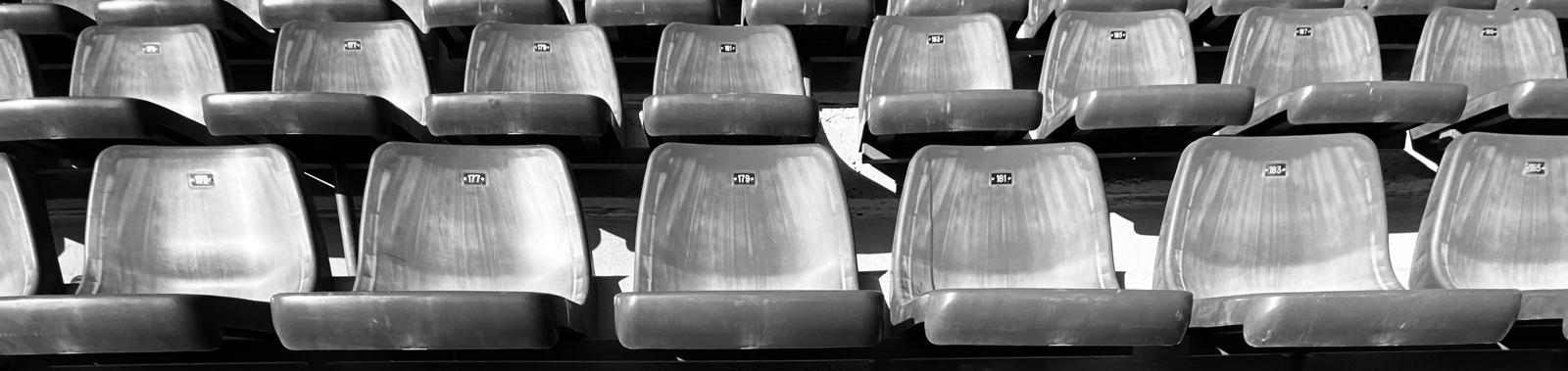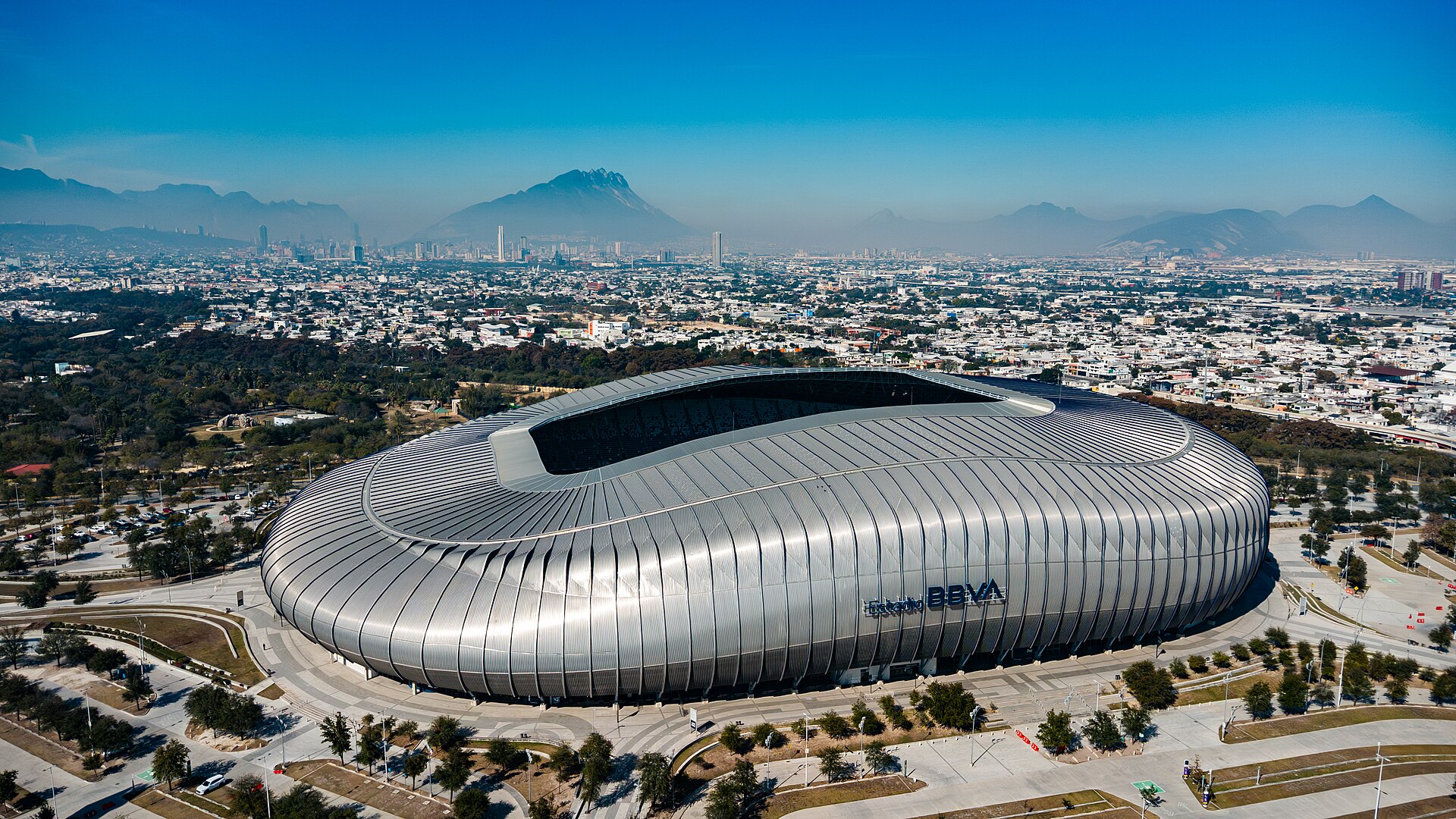
Estadio BBVA, Estadio Monterrey during the 2026 World Cup, is easy to recognise before a ball is kicked. Its metal skin sits beside Guadalupe, the Cerro de la Silla rises behind the stands, and the whole building seems made to introduce Monterrey to anyone arriving for the first time. But this stadium did not appear from nowhere. Before Rayados had a modern home of steel, shade and mountain views, the club carried its history in an older ground on a university campus. To understand why Estadio BBVA looks and feels the way it does, the story has to begin with the place Rayados left behind.
A club leaves home
Before Estadio BBVA, Rayados played in a place that belonged to a different time. Club de Fútbol Monterrey, often called Rayados, spent much of its history at Estadio Tecnológico. The club says it played there from 1952 to 1973, and then again from 1980 until 2015. For supporters, that made the stadium more than a venue. It was where matchday routines were formed over decades.

Estadio Tecnológico stood on the campus of Tecnológico de Monterrey, one of the city’s best known private universities. That setting matters. The stadium was not built only for Rayados. It belonged to a broader sporting and educational world. It hosted football, American football and major events, including matches during the 1986 World Cup. Rayados made it feel like home, but the ground was never designed as a modern football only stadium for the club.
By 2015 Rayados were ready to leave that shared setting. Modern football had changed what clubs expected from stadiums. A new ground needed closer stands, better media facilities, commercial spaces and more control over the whole matchday experience. Estadio Tecnológico had memory, but it also had limits. The final league match there came on 9 May 2015 against Pumas. Rayados describe that game as the end of a long chapter in the club’s history.
The new chapter opened less than three months later. Estadio BBVA opened on 2 August 2015 with a match against Benfica. Rayados won 3 0, and César Montes scored the first goal in the new stadium. The club presents Estadio BBVA as the first stadium in Monterrey built specifically for football. That was the deeper meaning of the move. Rayados were no longer adapting to an older shared venue. They were stepping into a building designed to carry their own image.
Steel from the city
The new stadium did not try to look like the old one. Estadio BBVA has a hard metal skin, a wide roof and a structure that connects quickly to Monterrey’s industrial image. For readers who do not know the city, Monterrey is one of the key economic centres of northern Mexico. Its economy has long been tied to services, manufacturing and heavy industries, including ironworks and steelworks.

That industrial identity is built into the stadium’s design. The building takes inspiration from the city’s history of brewing and steel manufacturing. Its structure is covered with metallic armature and aluminium, giving the outside a hard and deliberate presence. Put simply, the stadium was shaped to speak the same visual language as the industries that helped define Monterrey.
That makes Estadio BBVA different from Estadio Tecnológico. The old ground gathered meaning because people returned to it for generations. The new stadium began with meaning built into its frame. It was not only built to host Rayados. It was built to present Rayados as a modern club from a modern industrial city.
The same design idea appears in the details. The rolled steel trusses and aluminium cladding refer to the region’s steel mills. The façade and curved openings also connect the building to Monterrey’s brewing and steel history. These details matter because they show that the stadium’s appearance was not random decoration. It was part of a planned identity.
The nickname follows from that image. Estadio BBVA is widely known as the Gigante de Acero, the Steel Giant. It fits because the building already looks like a steel object placed between road, parkland and mountain. For supporters, this is part of the arrival. They approach a stadium that feels connected to the city around it.
Shade in Monterrey heat
A stadium in Monterrey cannot be designed only for photographs. The city is hot for much of the year, and supporters experience a stadium with their bodies. They walk across open spaces, wait outside, climb stairs and sit in the stands.
Estadio BBVA answers that climate through shade and airflow. The venue was designed around visibility of the pitch and comfort in the stands. Air enters through openings in the metal façade, helping to ventilate the stadium and keep spectators and players cooler. The same outer skin that gives the stadium its industrial character also helps the building breathe.
The roof has the same practical function. Its cantilevered structure reaches 55 metres and provides shade and comfort inside the stadium. That matters because shade is not a luxury in Monterrey. It shapes the ordinary experience of sitting in the stands, especially for visitors who do not know the local climate.

For readers who have never been there, the design can be understood in simple terms. The roof sits over the crowd. The façade lets air move through the venue. The stands are close to the pitch. The stadium does not only try to look impressive. It tries to solve basic matchday problems in a hot city.
The mountain kept visible
Many modern stadiums turn inward. Once supporters enter, the outside city disappears behind walls, screens and hospitality areas. Estadio BBVA could have followed that model. Instead, one of its clearest design choices was to keep Monterrey visible.
That visibility comes through the Cerro de la Silla. For people outside Mexico, it helps to explain what that means. The Cerro de la Silla is the mountain that rises beside Monterrey and gives the city one of its most recognisable shapes. The stadium is framed to the south by that mountain, which is widely treated as a symbol of Monterrey.

The stadium was shaped around that view. The roof lowers toward the south so the mountain remains visible from inside the venue. From the north stand, supporters can see the pitch, the roof and the Cerro de la Silla beyond the stadium. The mountain was not an accidental background. It was part of the design.
This makes Estadio BBVA easy to understand for visitors. The field sits below the stands. The metal roof frames the crowd. Behind the stadium, the mountain rises over the city. In one image, a visitor can see football, architecture and landscape together.
The mountain gives the stadium its strongest image. But it also makes the next layer harder to avoid. If the building gains power from its setting, then the ground beneath it matters too.
Contested land beneath
The most difficult part of Estadio BBVA is not its shape. It is the place where that shape stands. The stadium sits in Guadalupe, a municipality within the Monterrey metropolitan area, beside La Pastora and near the Río La Silla. For readers who do not know the city, this was not an empty edge of town. It was an area connected to green space, water and public use.
The project was contested before the stadium opened. In 2009, opposition formed against construction in La Pastora, described locally as a wooded area with protected natural value. In 2010, the governor of Nuevo León asked the local congress to grant a land concession to FEMSA, the company linked to Rayados. Construction was later stopped in 2012 for a public consultation on land use.
That gives the stadium a second story beside the architectural one. One story is told through steel, shade and mountain views. The other asks who gets to shape land beside a river and a public green area. This is where Estadio BBVA becomes more than a beautiful modern venue.
The club presents the surrounding project as regeneration. The wider plan included public spaces along the Río La Silla, with more than 13 kilometres and 140 hectares connected to the project. Around 72 hectares were placed under the permanent responsibility of Club de Fútbol Monterrey. The later park project included paths around the river and five public parks.
Both accounts now sit beside the stadium. For some people, Estadio BBVA is part of a renewal project that improved public space. For others, it remains tied to an earlier argument about protected land, private power and environmental impact. A careful story should not decide that debate too quickly. It should show why both the beauty and the tension belong to the same place.
That is what makes Monterrey Stadium more than a World Cup postcard. It is a football ground built from steel, heat, mountain and argument. In 2026, visitors may arrive for four matches and see one of the most striking stadium views in North America. But beneath that view is a question that began long before the tournament. Who gets to shape the land around a modern football city?
Estadio Monterrey will be seen by many visitors as a young and modern World Cup venue. That image is true, but it is not the whole story. The stadium begins with Rayados leaving an older home, then moves through steel, heat, shade and the mountain that keeps Monterrey in view. It is a building shaped by ambition, but also by the land beneath it. That is why Estadio BBVA is more than a stadium with a beautiful backdrop. It shows how a football ground can carry a club, a city and an unresolved question in the same place.